





Radka Částková and Magdalena Šimurdová
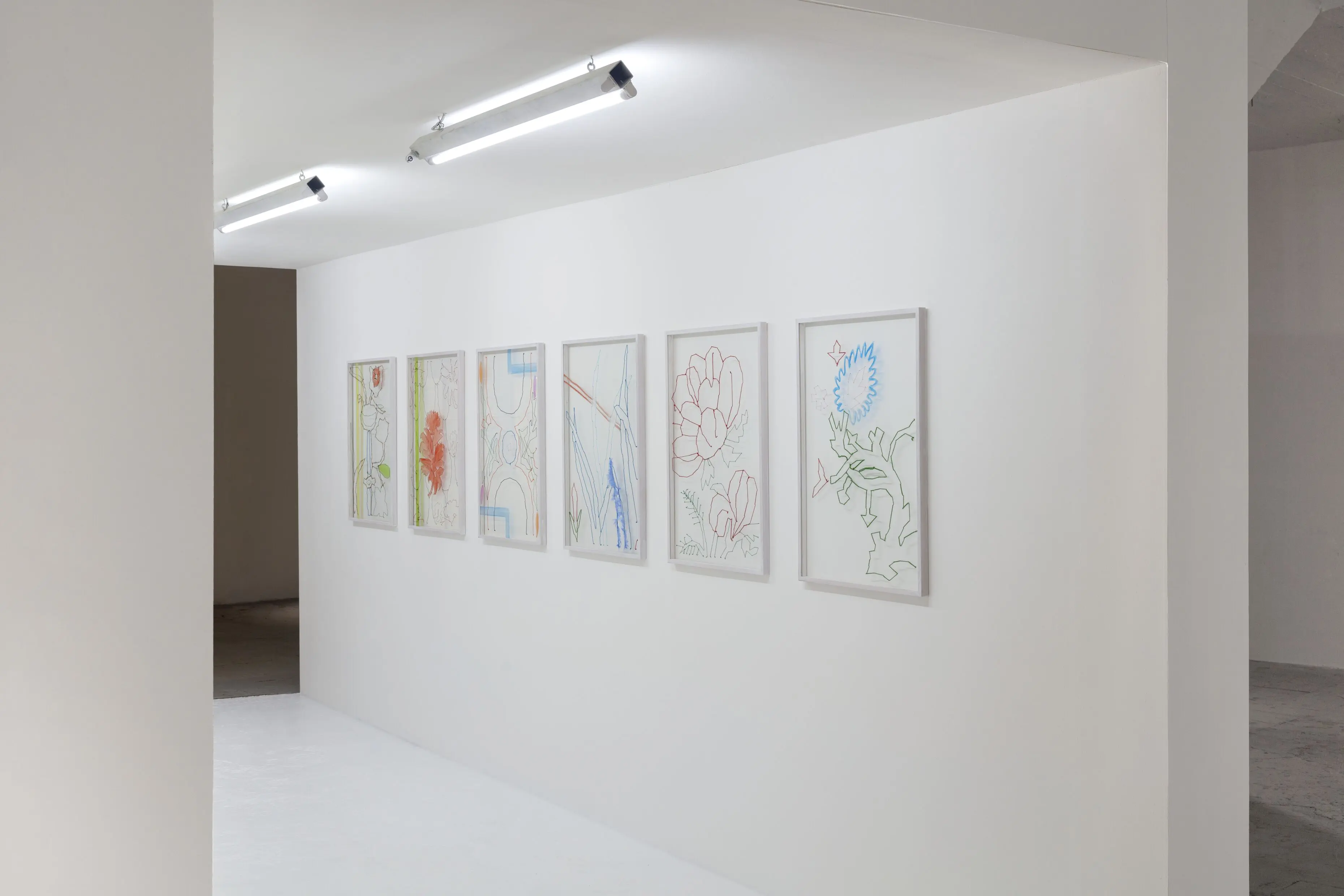
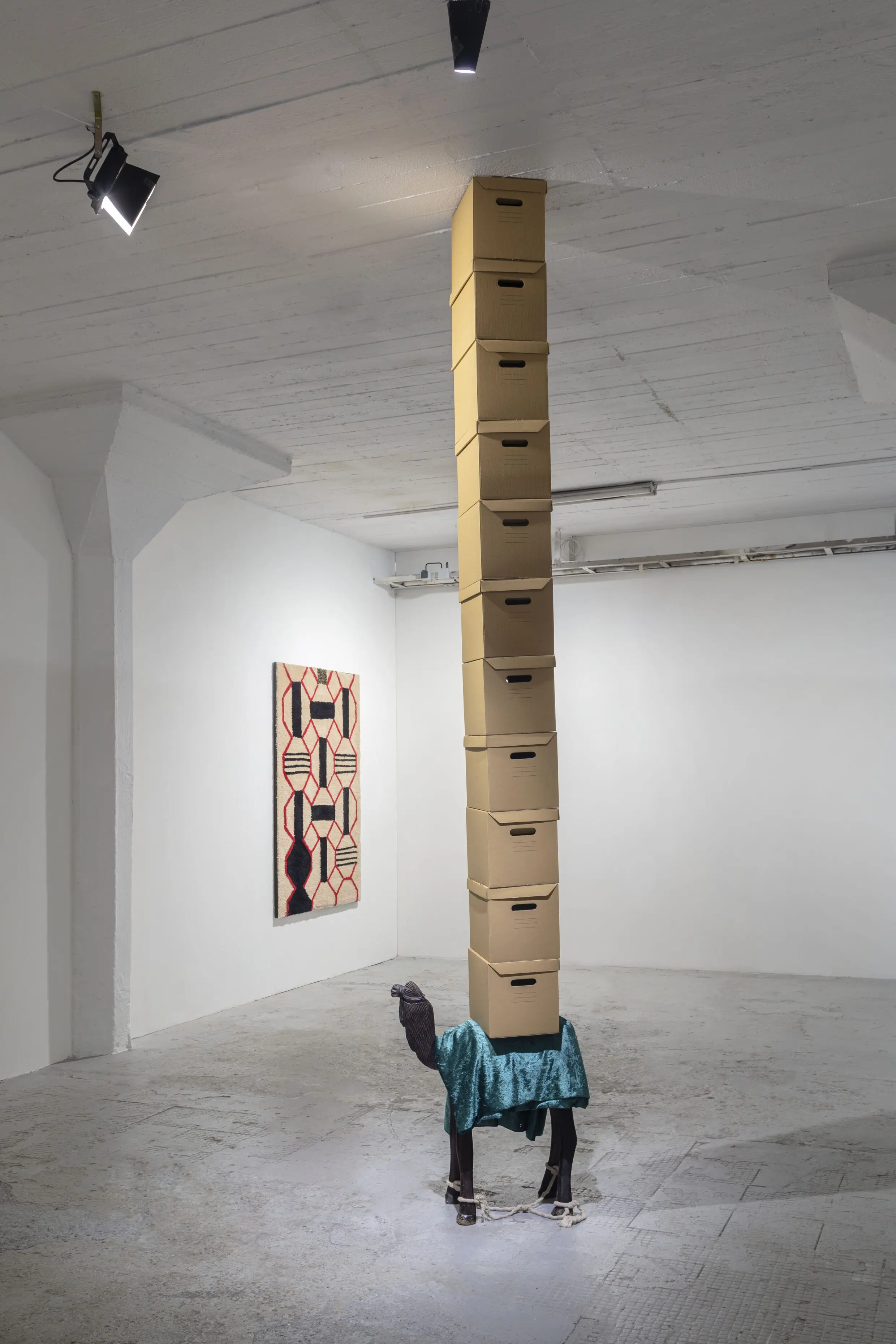
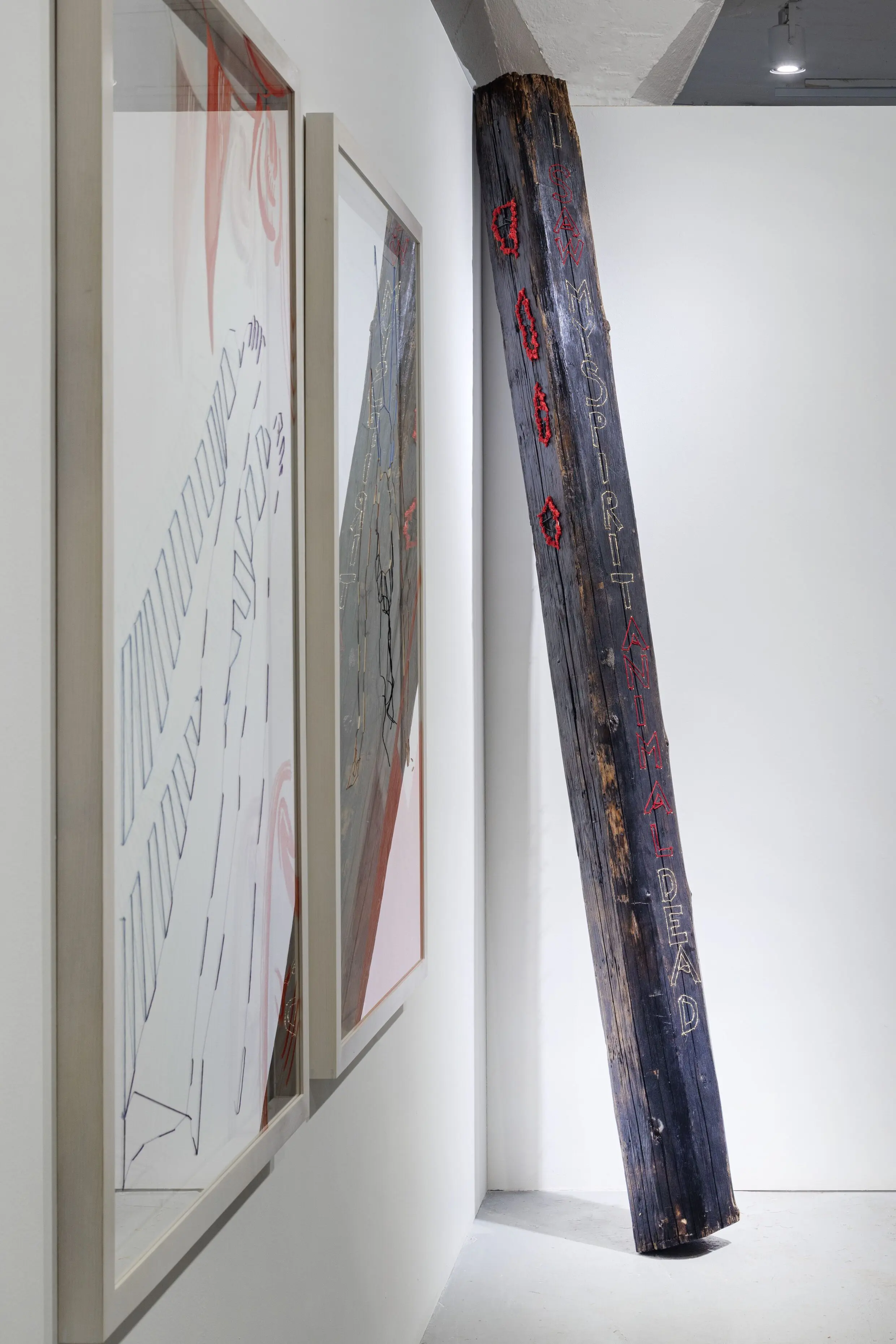
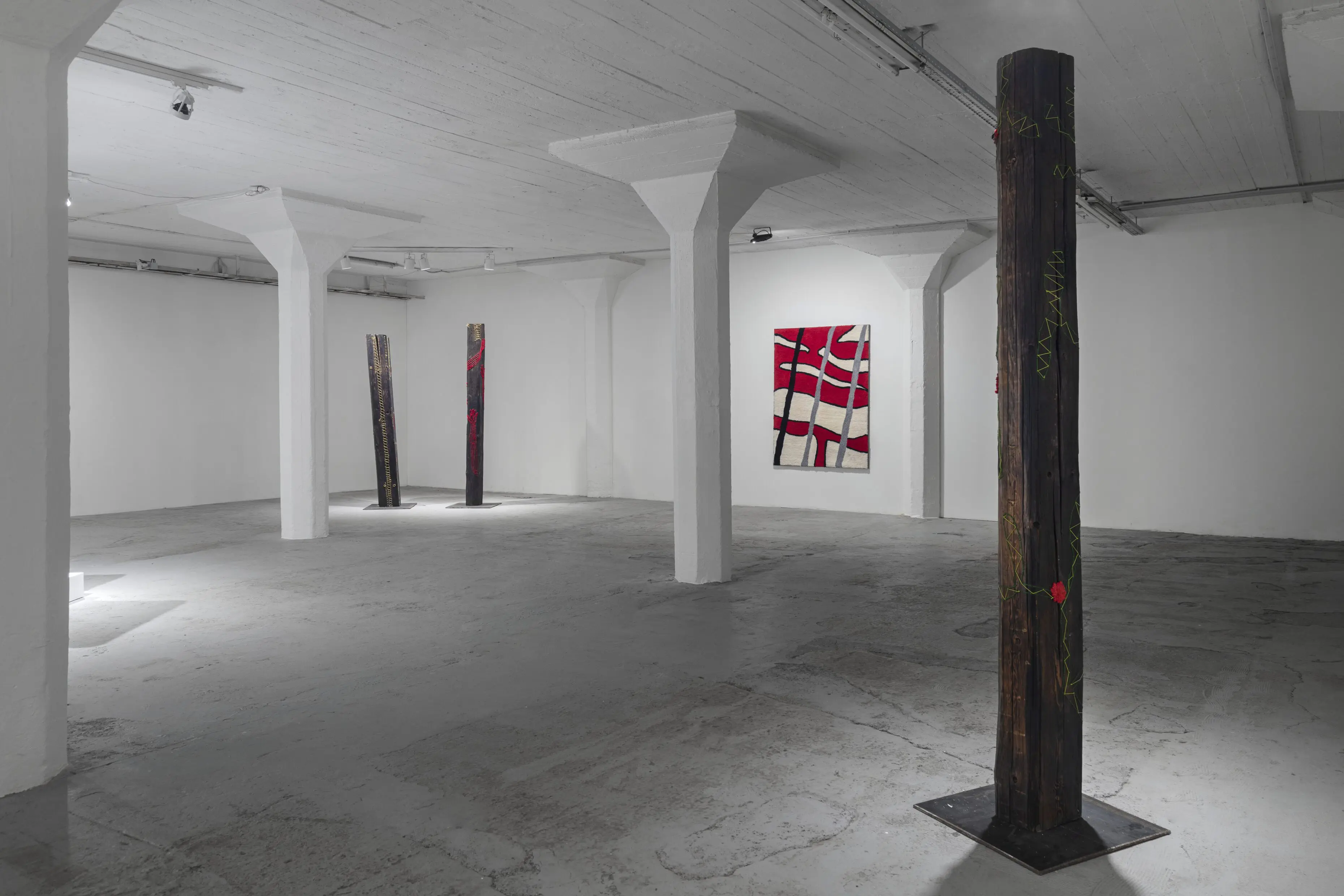
For Karíma Al-Mukhtarová, “First Principles” are based on the implementation of the artist, her own authentic person, into the artwork. It is not a flat, typical, and automated artist-art relationship. It concerns engaging with her body beyond its normal function as an instrument of her will. It is not just, for example, using her hands as the central medium of a sign message in the photo series “Inner Feeling”. There is also a craft dimension which goes often beyond the usual inventiveness and personal involvement. This involves an even intimate relationship with the material here and there. Karíma does not perceive the material as an idea carrier as it is not “a medium” in the usual sense of the word. It concerns the compulsive urge to engage with the material in the sense of exploring its role and energy.
Naturally, this actuality gives rise to the factual meaning or role that the material occupies in her work. While she clearly foregrounds the content, idea and its transfer to a perceiver in the beginning of her praxis, the material becomes more and more equal over time. The material essence, specific properties, and personal “language” of the material become part of the content in many cases. To some extent, this is supported by the third distinctive element of Karíma’s work, which is craft. Her fascination with craft reaches almost an obsession in some works (Stoly). Her relationship to craft and its wider use are not “just” a matter of visual liking and handicraft, however. Craft procedures which; for example, in the case of drilling thousands of holes with needle drills into thin sheets of glass require maximum concentration, calming down, and almost unlimited time; function as “a pier”, a truss in which the resultant influences of the surrounding world and her reactions to them meet.
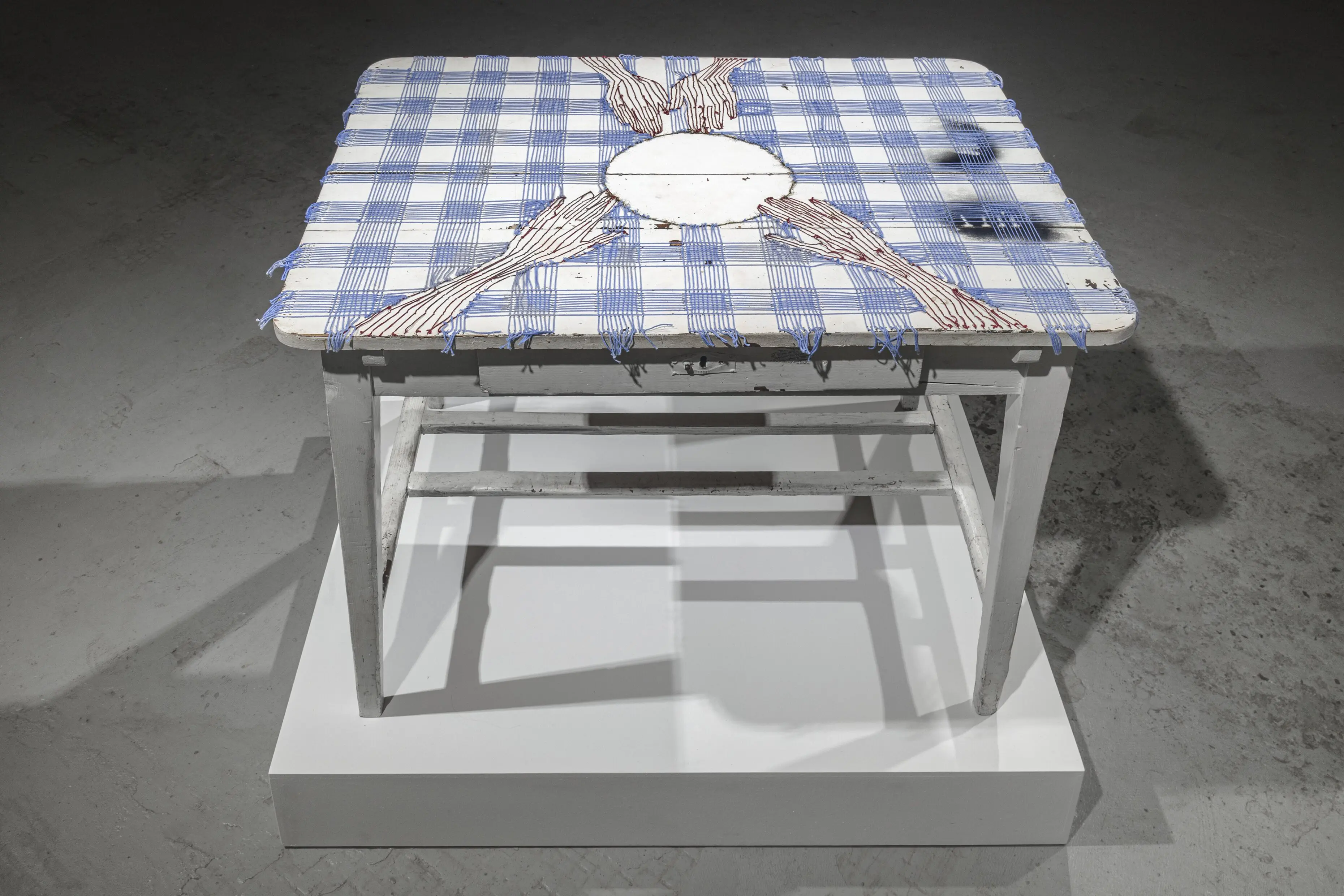
This brings us to mirroring philosophy of the everyday in a way, which is made present in her praxis through everyday objects. The table and the rug are absolute representatives of encounter between textiles in forms of embroidery and weaving. Moreover, both of her series focused on the two are dominated by system and order—in embroidery visuality on the tables and in their original essence in case of the rugs. Order is a matter of system. Understanding the system (in general terms) is usually possible in two ways, either by finding the code which the system is based on or by becoming the author of the system you are a part of. Finding the code itself is the essence and purpose of existence not only in the creative process. A certain conscious and controlled surrender to a system, but strictly within the creative process, can be used for “locating” oneself, finding a position, a space, a frequency. Embedding oneself in “basic settings” where there is an autochthonous space for basic questions or assumptions and where the experienced and spoken can be simultaneously challenged or, conversely, affirmed. Combining content, form, and her aforementioned complex approach to the creative process, Karíma Al-Mukhtarová transforms the ancient saying that it is the red fabric that connects the seemingly unconnected, giving new meaning to the connected across times, into the material-body of “her” red thread. Quite automatically, subtly, with humility, and often according to the authentic primary assumptions.
Karíma Al-Mukhtarová (*1989) studied under the tutelage of Jiří Kovanda at the Faculty of Art and Design in Ústí nad Labem, Jiří David at the Studio of Intermedia Confrontation at the Academy of Arts, Architecture and Design (UMPRUM) in Prague, and Milena Dopitová at the Academy of Fine Arts in Prague, where she graduated in 2018. She is the winner of the Essl Art Award CEE for the Czech Republic (2013). In 2019, she completed a several-month internship at CEAAC in Strasbourg, France. In 2023, she participated in the prestigious residency program Art Omi in New York. Her work deals with issues of identity and the socialization process of the individual.