


Radka Částková and Magdalena Šimurdová
Do not gobble life down, you will only make yourself sick. Eat it bit by bit, instead… As a ritual, food is an important part of any lifestyle and tradition. It becomes a symbol of simplicity, quality, and honest work. It brings together cultures, tastes, and generations. A ritual is like food which we can absorb and digest both on our own and together. Breakfast, snack, lunch, snack, dinner… What drives the ritual? Hunger. Hunger for knowledge, for fulfilling our needs. Desire is also often the driving force. The desire to feel pleasure and to experience. (Provided you have a healthy digestive system.) Shared enjoyment often takes the form of small, repeated gestures—sitting down at the table, offering a cup of coffee, raising a glass. In such unassuming moments, a ritual is born, transcending mere fulfillment. Food thus acts as a medium of connection: it links physical need with social experience, personal memory with culturally shared meanings. What may seem like mundane everyday life reveals itself upon closer inspection as a complex field of symbols, emotions, and expectations.
The exhibition project Food as Ritual oscillates at the intersection of these levels and explores the diverse ways in which our relationship with food is inscribed in both individual and collective experiences. It focuses on the pleasure of taste and sensory experience, the rhythm of daily habits, and the quiet, intimate strategies through which we organize our own world via food. However, the project also offers a critical perspective: it highlights situations in which food becomes a tool of discipline, social judgment, or pressure on the body and identity. Because what does not fulfil us is the power of social media.
The participating artists approach the theme from various perspectives and through different media, creating a multi-layered structure of narratives. In the end, the exhibition does not arrive at a single conclusion, but rather unfolds a field of meanings in which personal experience intersects with a broader social context. Food as Ritual invites a more attentive perception of seemingly ordinary situations and opens up a space for sharing, for questioning established notions, and for a new sensitivity to how deeply food is embedded in our lives.
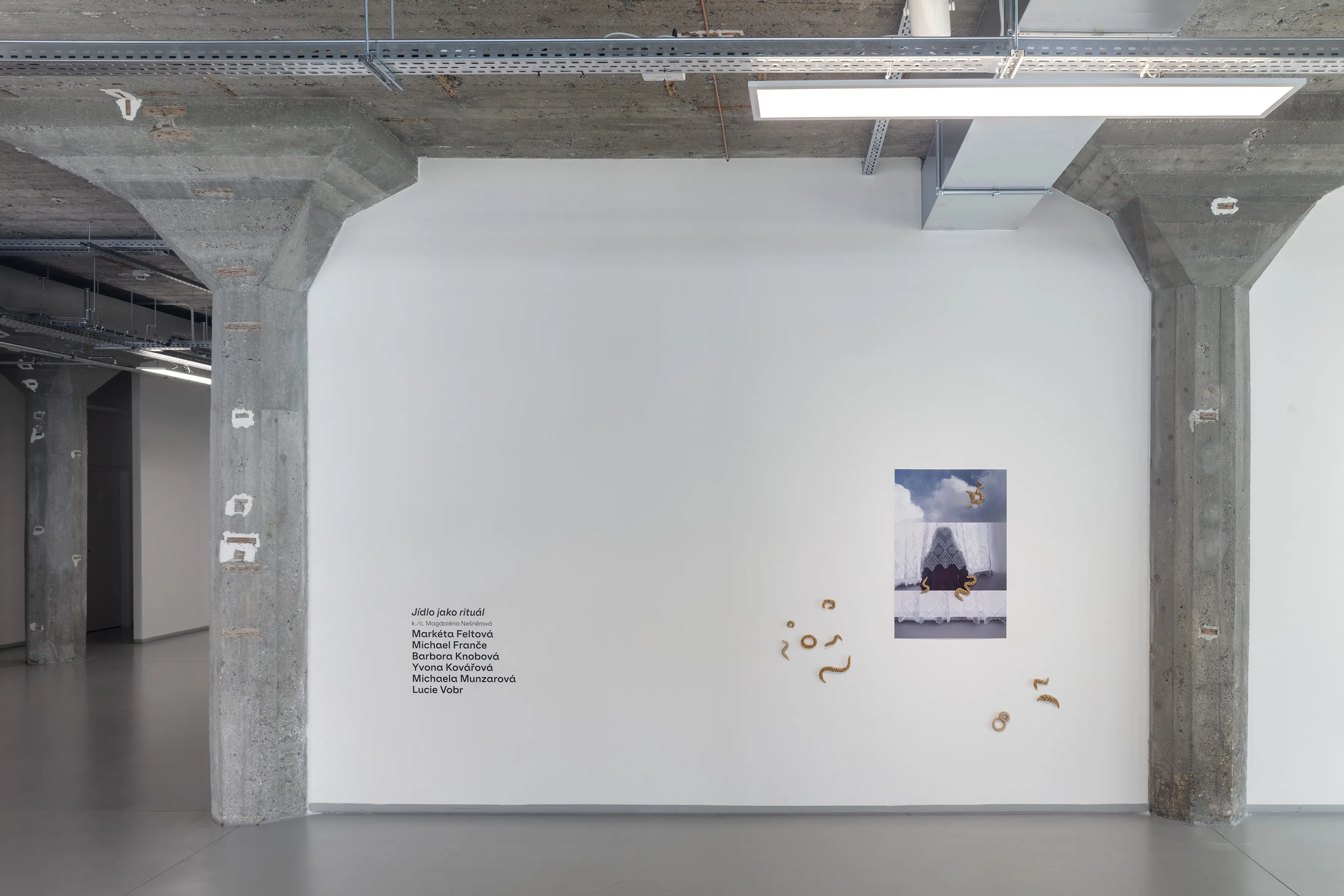
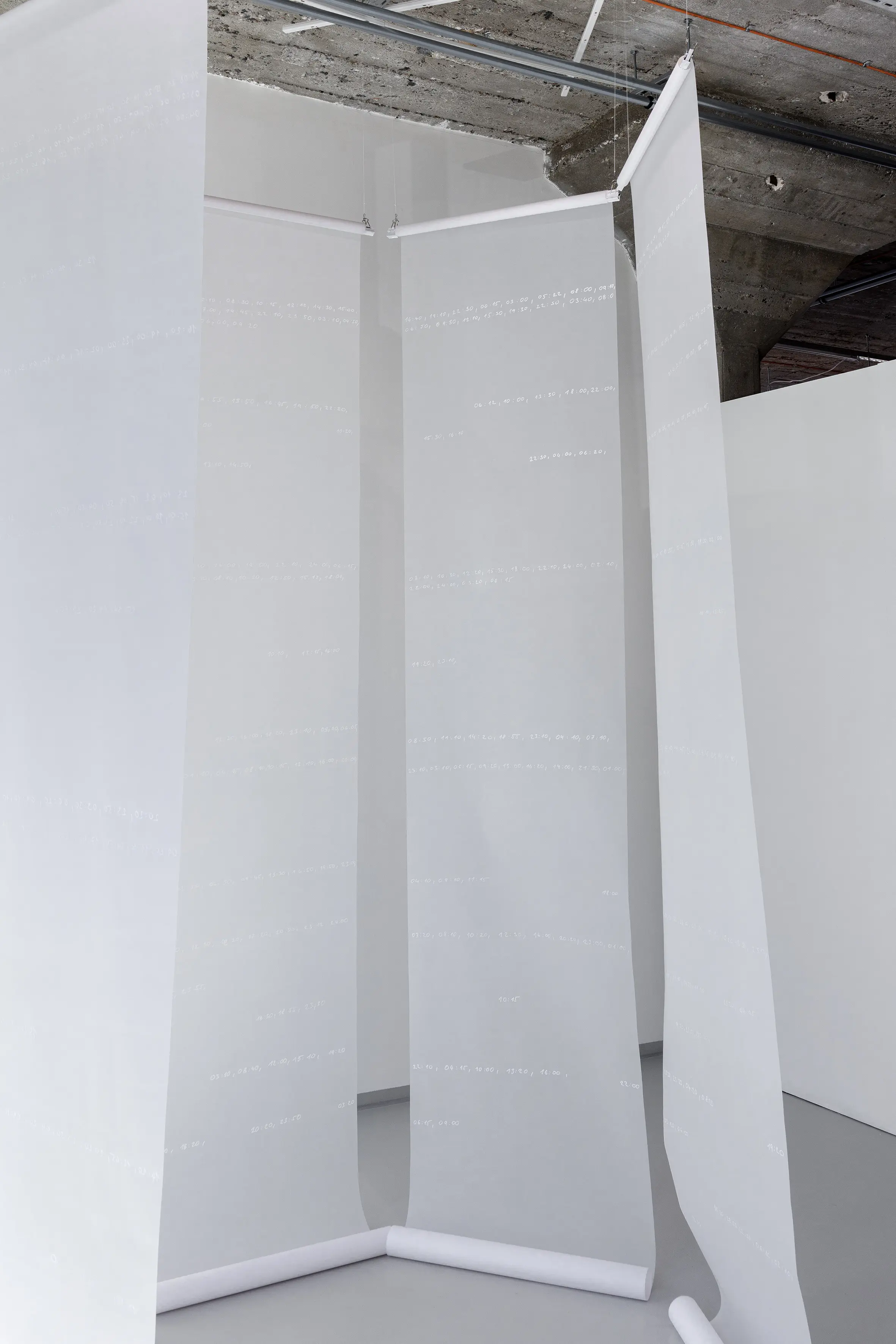
In Markéta Feltová’s work Zas a znova (Again and Again), the intimate experience of early motherhood is transformed into a visual map of time, which breaks down into tiny, constantly repeating segments. The artist draws on the first months of breastfeeding—a period when originally clearly defined moments became an almost endless rhythm, gradually blurring the distinction between day and night. The diary entries of individual feedings, which Markéta initially kept meticulously, gradually turn into a disordered trail. The linear perception of time ceased to make sense. Everything merges into a single stream in which beginnings and endings lose their certainty.
The installation, composed of five vertically suspended strips of tracing paper, creates a space of a subtly separated reality. The viewer is invited to step inside—into a place where the world behind the thin membrane appears out of focus, slowed down, and seemingly distant. This semi-enclosed space functions as a metaphor for the state in which the artist found herself: an intimate, slightly veiled microcosm where the ordinary perception of time and reality transforms into the quiet, repetitive rhythm of everyday life.
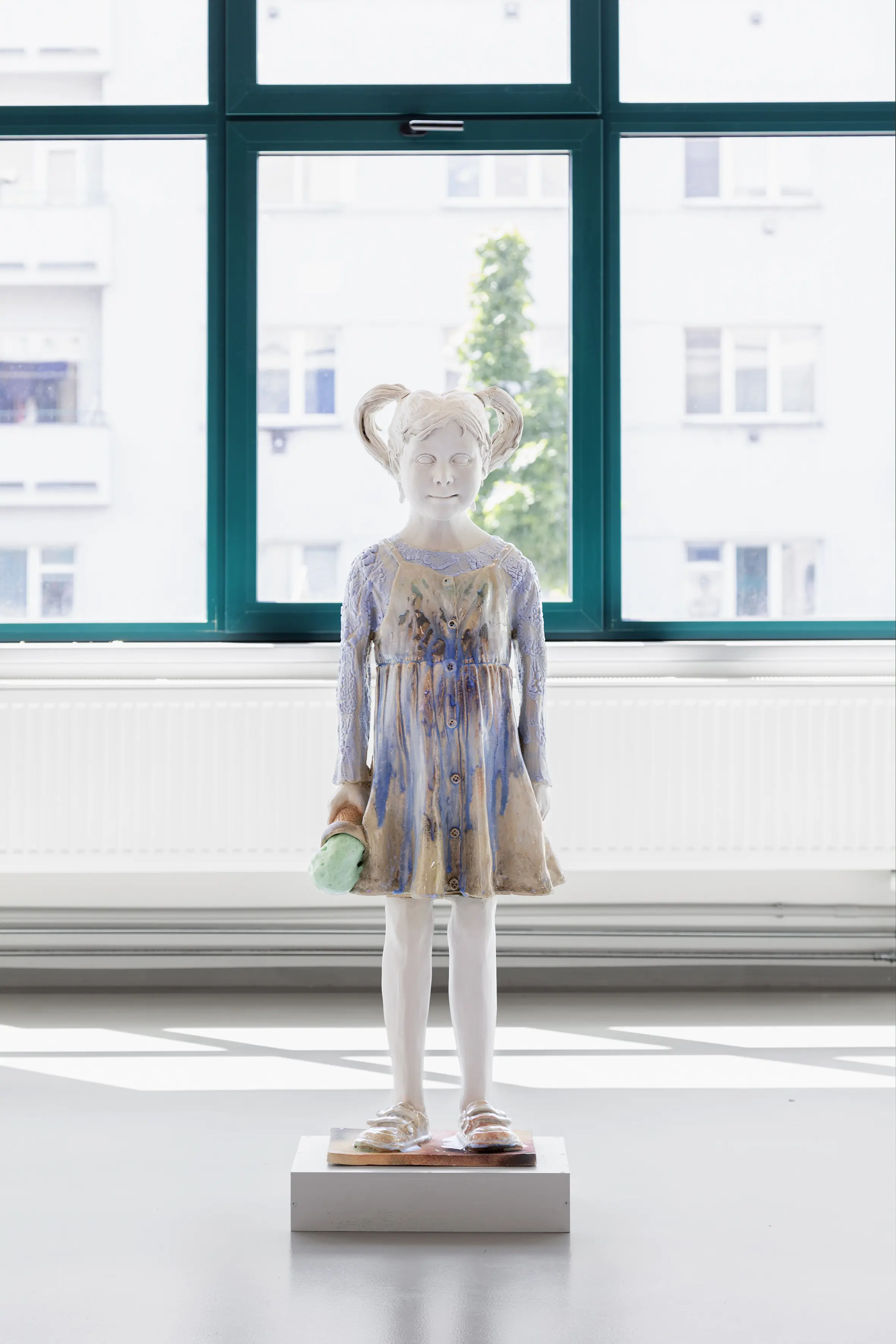
The sculpture Vynášení Morany (Carrying Out Morana) treats food not as a consumer item, but as a symbolic offering. Michael Franče draws on a personal family micro-ritual—the shared moment of enjoying the first spring ice cream with his daughter. The moment when a scoop of ice cream slips from the cone onto the ground is not interpreted here, within the logic of consumerism, as an accident, a loss, or a reason for a child to cry, but as a quiet, almost initiatory gesture of sacrifice. In this context, a mundane moment takes on a broader meaning and evokes the ancient human need to respond symbolically to the changing seasons.
In this gesture, the artist recognizes an unconscious parallel to traditional rituals associated with the end of winter. The backdrop of our lives is changing, traditions are taking on new forms, yet the need to symbolically bring the winter season to a close and the desire to honor the return of the sun, warmth, and a new cycle remain surprisingly constant. What used to take place in folk customs through the carrying out of Morana or Death is shifted here to the contemporary urban environment. Melting ice cream falling to the ground becomes an offering to the sun and the earth—a small symbol of the waning cold.
In the gallery space stands a realistically rendered figure of a child surrounded by scattered, hand-sculpted, and glazed scoops of ice cream. These create a symbolic field which transcends the specific story of a single family. Each one may serve as a reminder of another child who, in a similar moment, is unconsciously repeating the same ritual. The installation thus reminds us that some of the most significant rites of human life do not arise from tradition or the calendar but are born spontaneously—in the small moments we experience together.
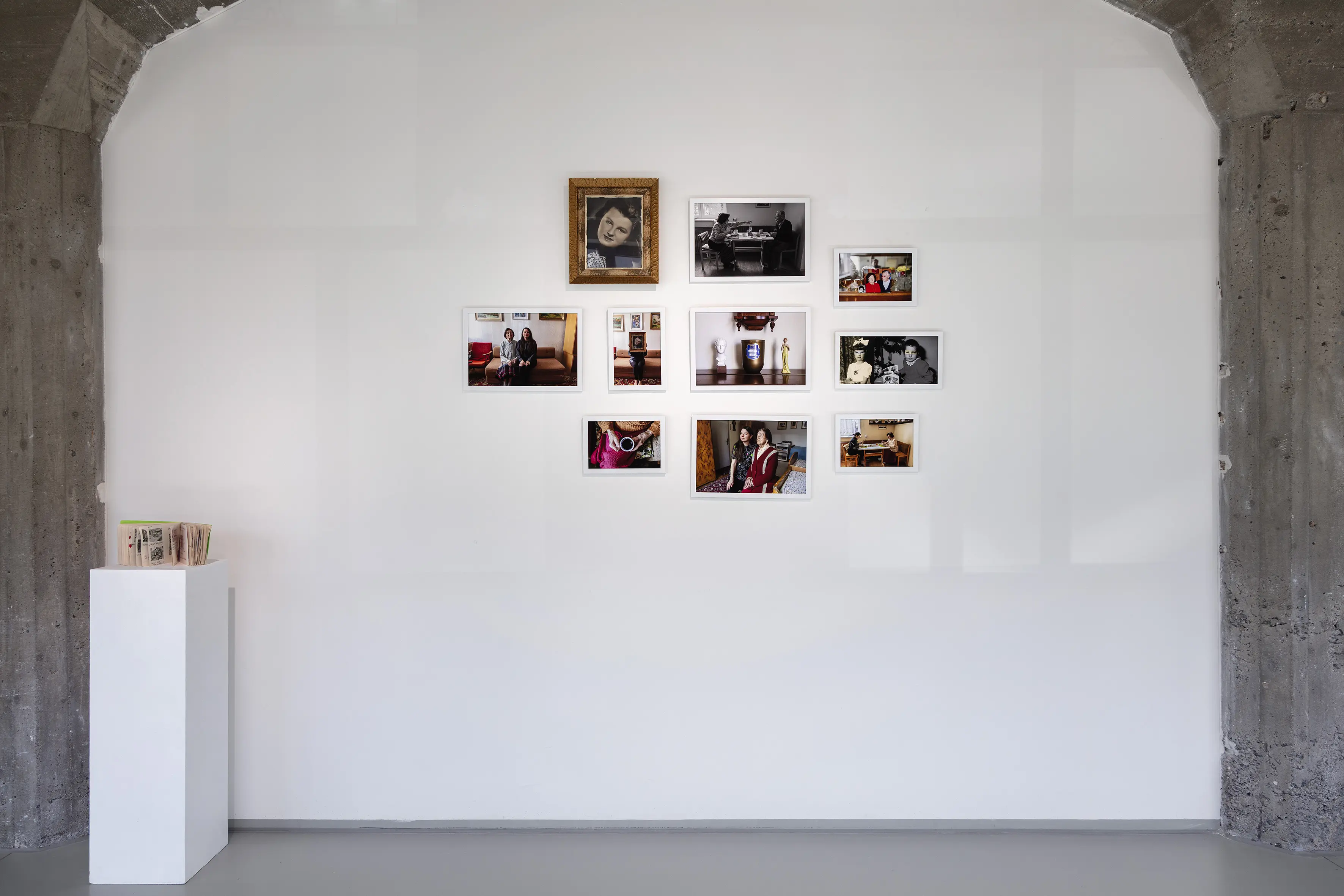
Barbora Knobová’s project stems from her patient, almost ritualistic observation of her grandparents’ daily lives. Their seventy-three years of life together were grounded in deeply ingrained habits, the most prominent of which was sharing meals. The regularly recurring structure of time worked as a subtle yet ever-present axis having held the rhythm of their household together.
Her grandfather’s death disrupted this delicate balance. The ritual, once shared and taken for granted, turned into an empty gesture. Barbora observes precisely this transformation—the quiet disintegration of their shared daily life and its occasional revival during visiting her grandmother. In these encounters, we see not only an effort to reconnect with a lost order, but also a subtle mirroring between the author and her grandmother: similarities in gestures, posture, or small movements seemingly leaping across generations.
In this project, food becomes a medium of memory, a continuity transcending personal history and touching on the broader theme of the intergenerational transmission of experience. Ritual is understood as a space where the past and the present intersect at every set table. In the resulting installation, the artist combines black-and-white and color digital photographs.
The accompanying diary project is based on the author’s daily documentation of food-related moments captured during her frequent travels across the country. The instant child’s camera she uses captures snapshots of situations that are as fleeting as the environments she passes through. However, the heat-sensitive paper fades inexorably, and the image gradually disappears. The transience of the material becomes part of the message itself—the visual trace disappears, but short textual notes attempt to preserve its meaning. An intimate map of a life period emerges, composed of rituals, family situations, and seemingly banal moments whose meaning transforms along with the material form of the work.
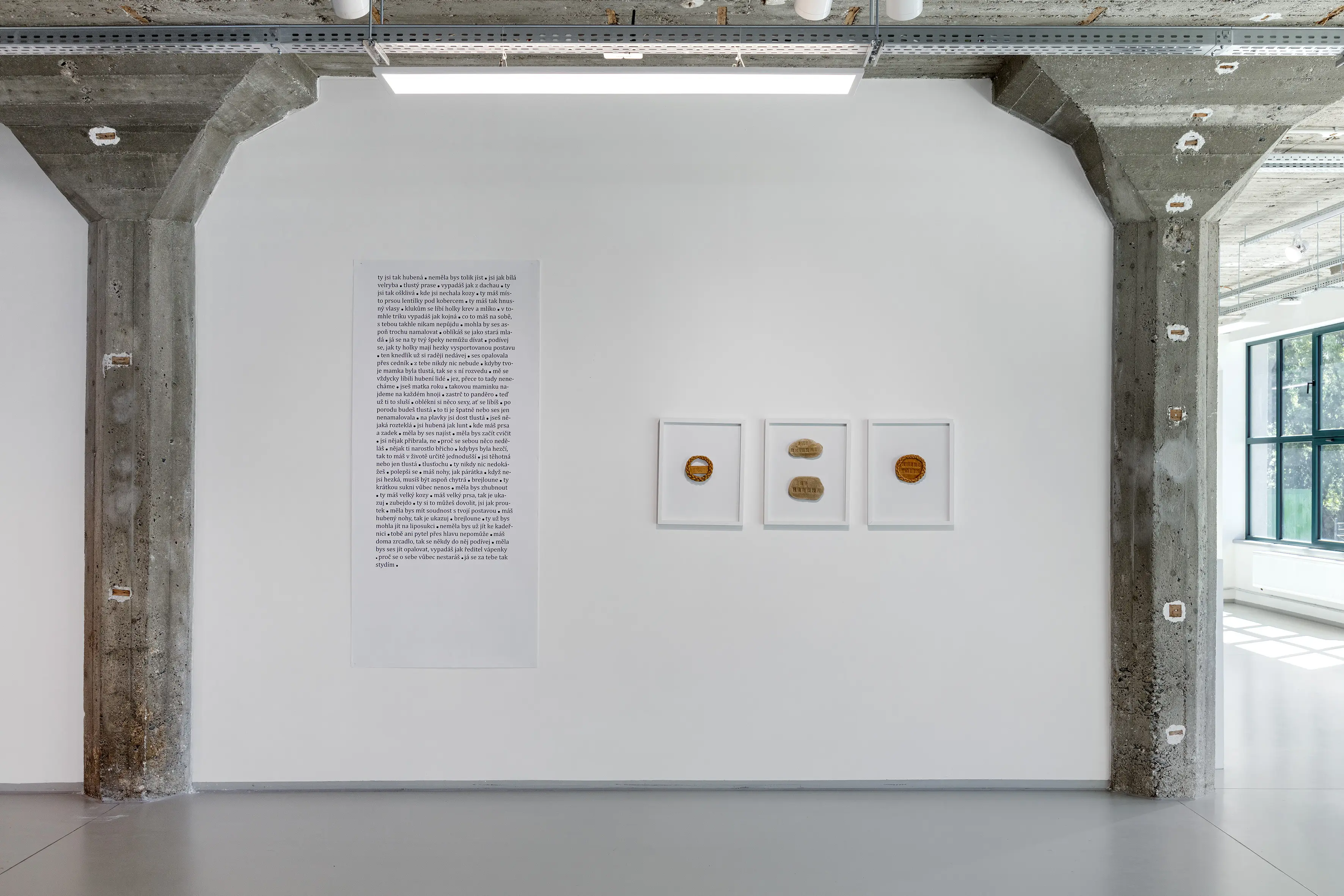
Words which at first glance seem like well-meaning advice, lighthearted jokes, or expressions of concern take on the contours of social norms in works by Yvona Kovářová. Phrases repeated almost automatically in everyday life become invisible boundaries determining who fits within acceptable notions of the body and who is an outsider. These phrases seep under our skin quietly and persistently until they become part of our inner voice. The works from the series Myslí se to dobře (Meant Well) raise the question of how such remarks shape our self-perception and why we feel the need to comment on the bodies of others as if they were a public space intended for evaluation.
Pastries from the Moravian town of Vizovice, traditional bearers of stories and ritual gestures, take on an unexpected role. Instead of small figurines, the dough forms sentences—normative statements traditionally associated with food and physicality, with the same matter-of-factness as family recipes. The material, originally intended for consumption, transforms into a medium that cannot be “digested” without leaving a trace. Each phrase reminds us how often an unobtrusive regulation of how we should look, eat, or exist takes place at the table—an environment that should be safe and intimate.
In this installation, dough becomes a ritual tool for recognizing the boundaries which society imposes on us. The artist creates a space for reevaluating and reflecting on what we have been taught to “swallow” without question. Through her work, Kovářová seeks a way to reconnect with her body and with herself.
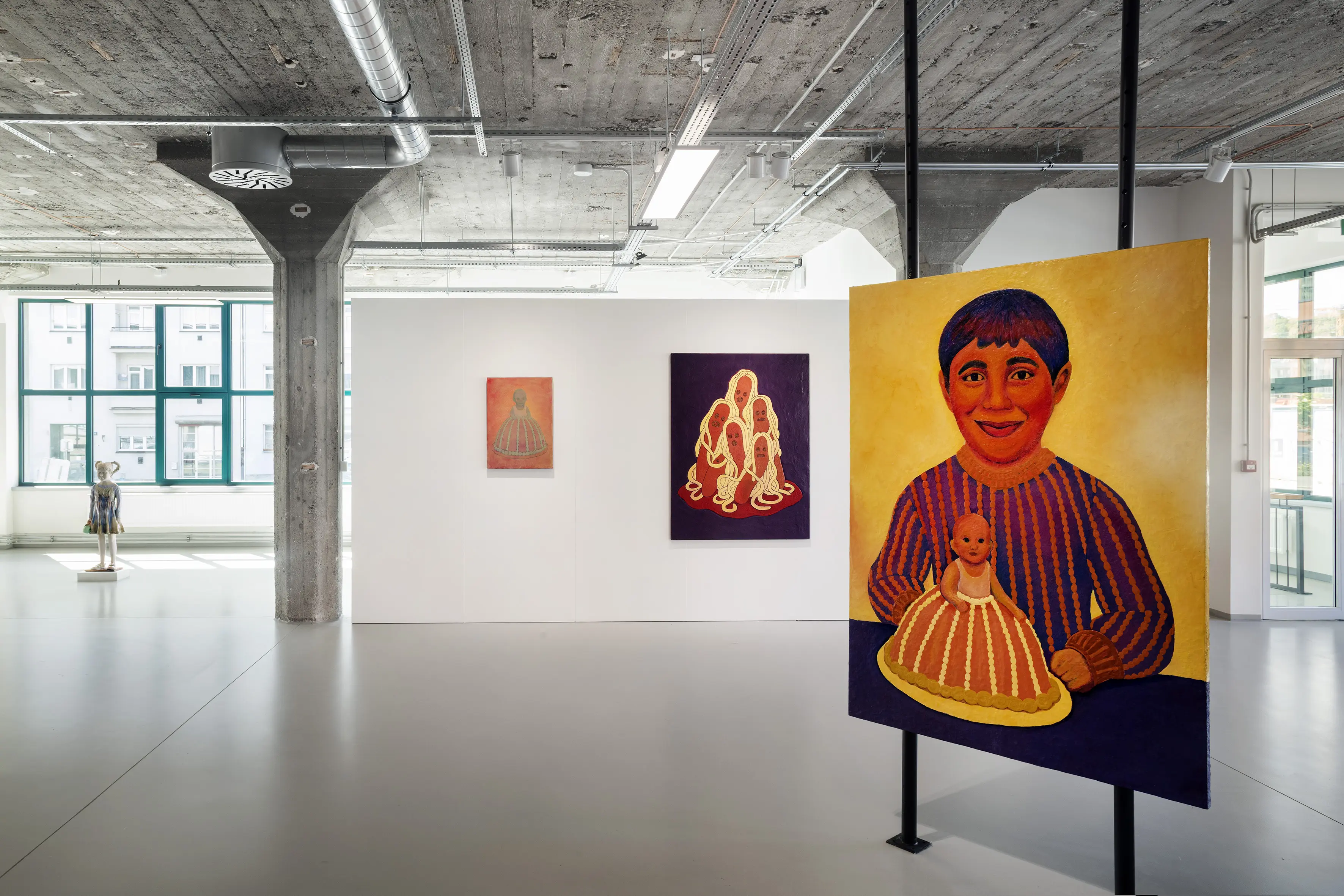
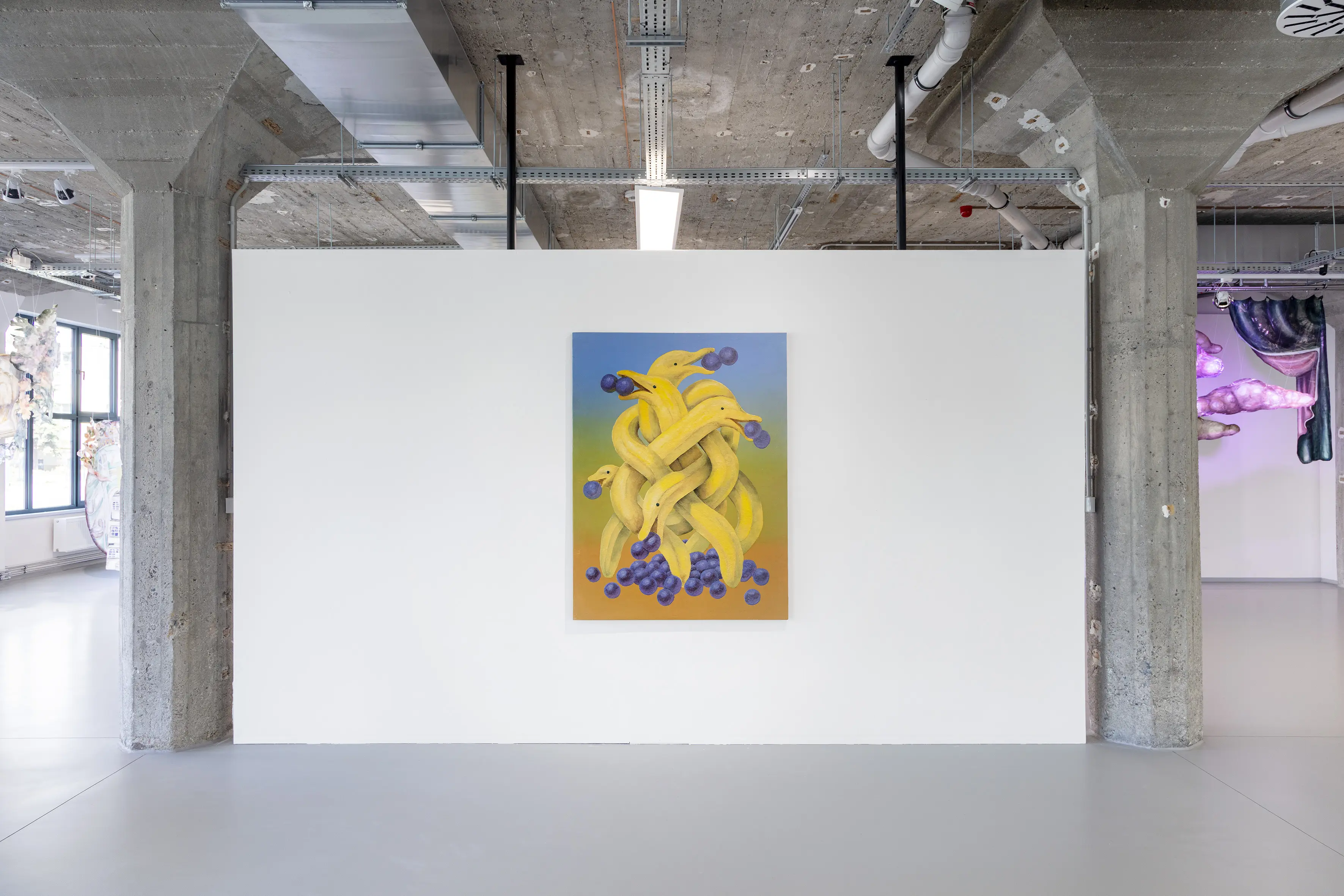
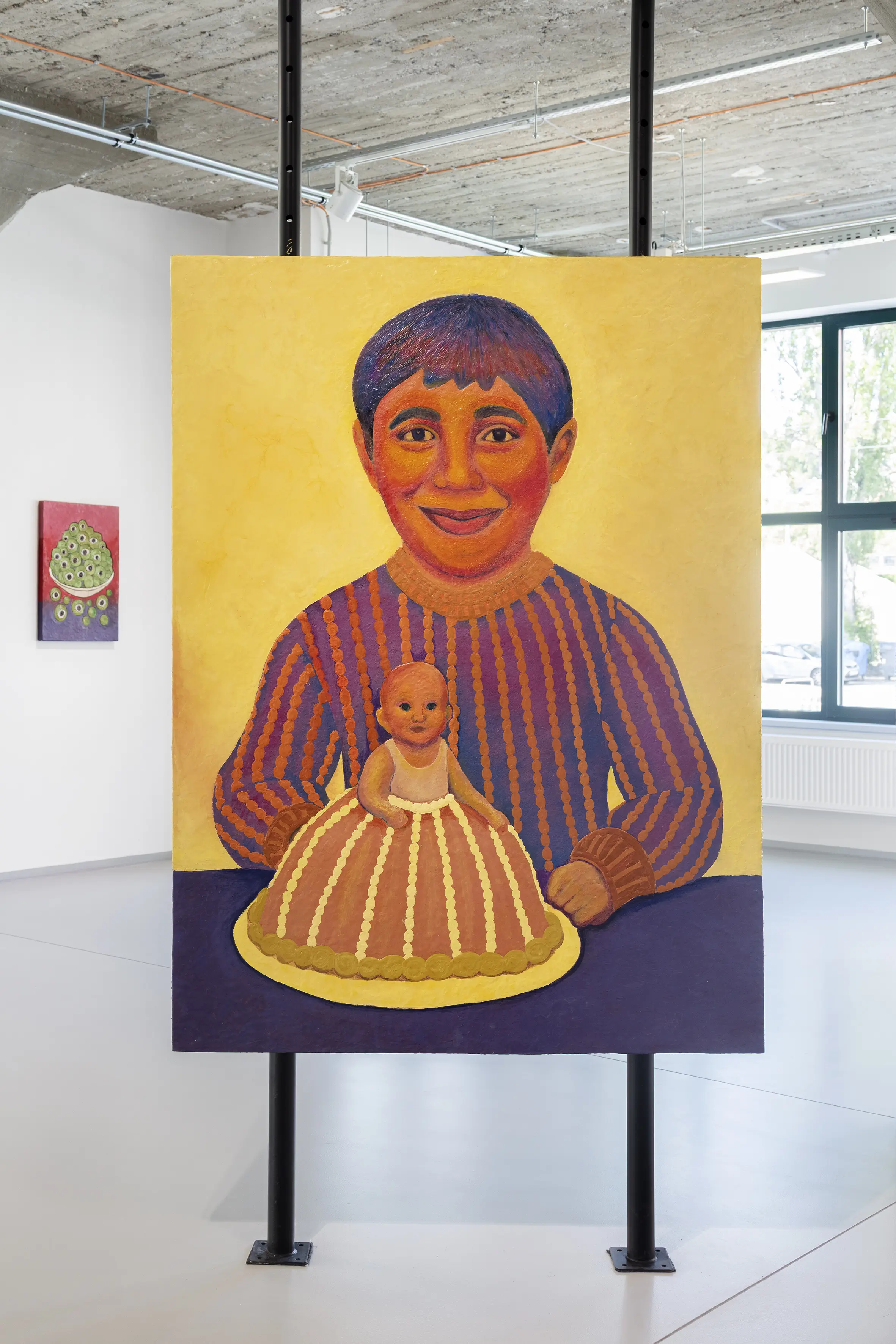
Michaela Munzarová’s cycle focuses on the phenomenon of contemporary food art—creations of animals, flowers, architectural structures, or illusory objects made from food. Food ceases to be a meal and becomes an image, an object, and a scenography. The inspiration from Dalí’s legendary book Les Diners de Gala is evident. Reality is distorted, exaggerated, and staged. Dalí works with corporeality, excess, and a touch of the grotesque. A dish is more than just food—it is a symbol of desire and fantasy. Contemporary food art further develops this play, albeit in a different visual language. Animals made of fruit, monumental cakes resembling sculptures, or desserts imitating other materials—all of this is a form of modern surrealism in which food transforms into illusion and reality puts on a new costume.
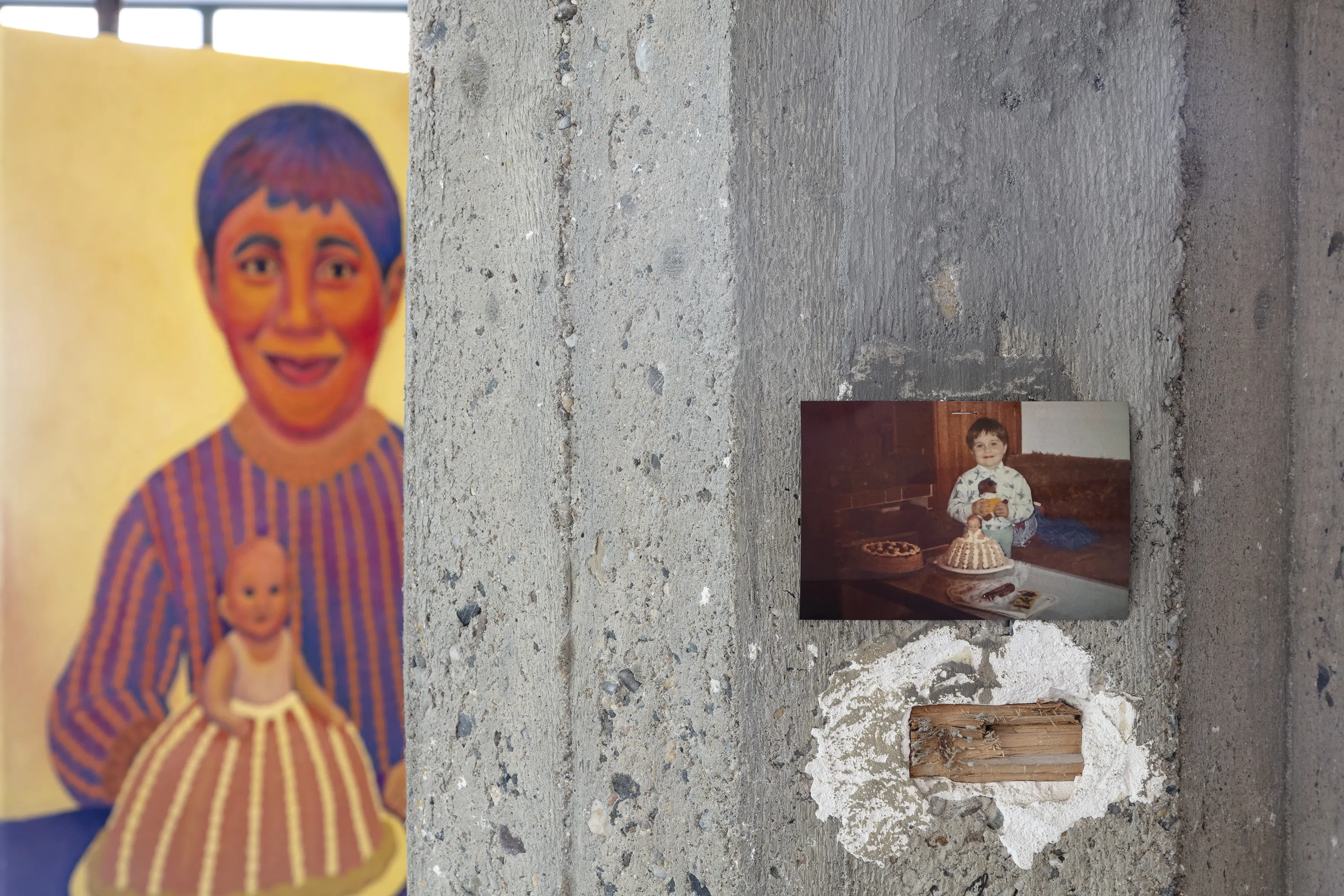
Michaela is fascinated by that very moment when taste recedes into the background and food is created primarily to be admired. Consumption is put on hold, sometimes even deemed undesirable—what matters more is the perfection of form. But what fulfills us? The power of social media? The artist captures this transformation in her paintings when food becomes an object balancing between beauty and absurdity. It is precise, seductive, yet slightly unsettling. It resembles a sculpture that is soft and ephemeral.
The choice of traditional painting further highlights this paradox: it slows down the otherwise fleeting existence of food art, which is typically intended for immediate admiration and rapid disappearance. Painting gives it permanence—it captures the illusion a moment before it has fades, allowing us to observe it with a sense of distance that is often lacking in the digital world.
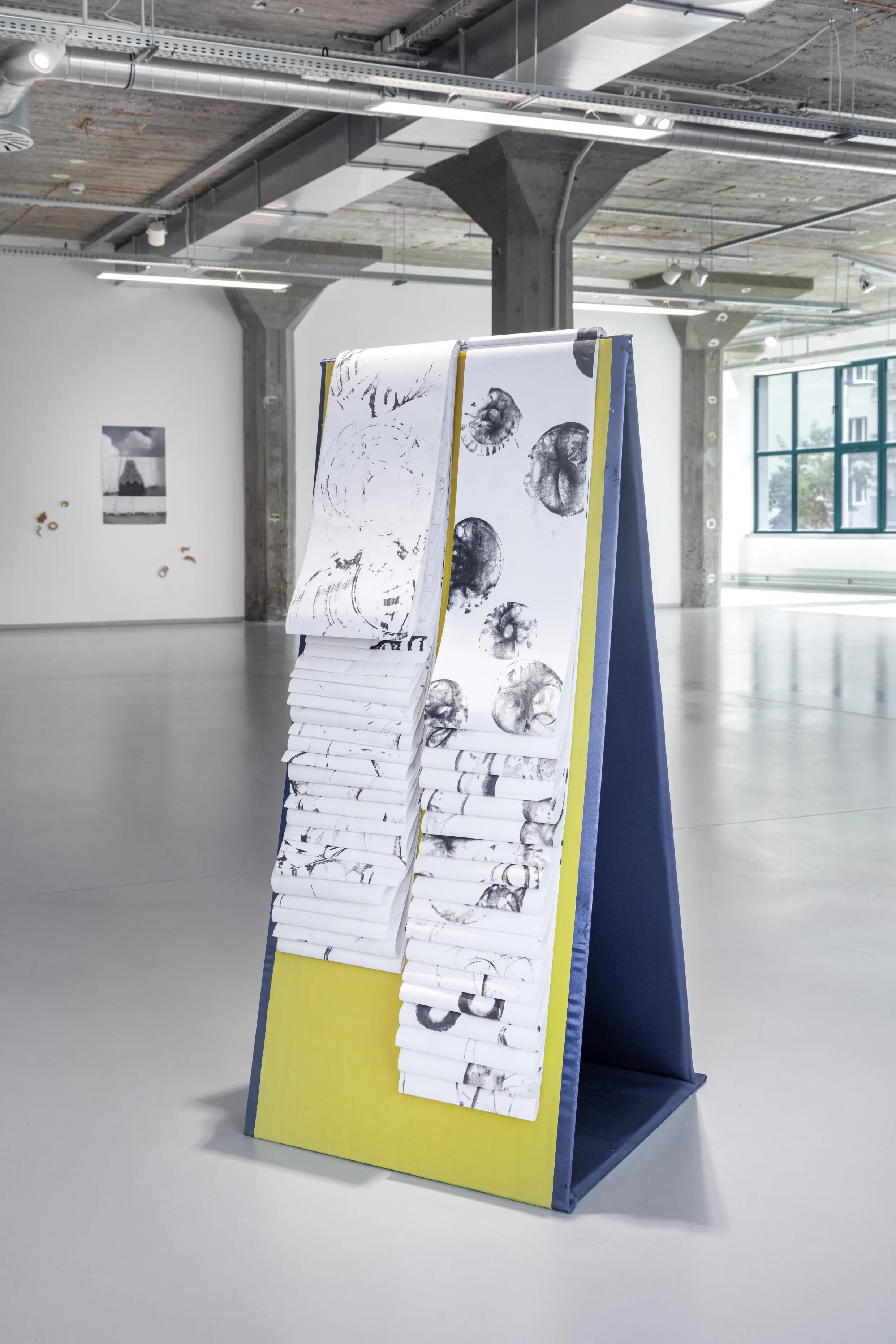
The installation Hausfraukunst alludes to Yves Klein’s Anthropometries and the principles of abstract Tachisme. Lucie Vobr handles the idea of cooking as an unassuming yet deeply rooted daily ritual. Food preparation is not reduced to a practical act with a pursuit of fullness here, but emerges as a process in which the body, memory, and care intertwine. Repeated contact with hot cookware, handling of ingredients, and working with heat create a series of gestures which are gradually imprinted on the materials as well as on human experience. Food thus becomes an event rather than an object—a transformation taking place simultaneously in matter and in the human being.
The installation space is defined by two objects made of heat-sensitive paper. Heat marks have been etched into their surfaces using hot kitchen utensils, functioning as ephemeral drawings. The viewer walks through a sort of fragile landscape of imprints, all gradually fading and disappearing. The paper works as a sensitive medium of memory—it captures the invisible effects of heat in much the same way that repeated rituals of care and cooking leave their mark on the body.
At the center of the installation stands a larger-than-life double-bellied object made of beeswax. It is not a realistic torso, but an anonymous bodily form oscillating between the image of a human body and that of a vessel. Porcelain and metal kitchen utensils have been partially imprinted onto its surface by heat. Kitchen objects thus cease to be external tools and become part of the body as another mark, scar, or burn.
The first exhibition titled Polévka na baru (Soup at the Bar) emerged from a gathering of longtime friends and active artists who met while studying together at the Ladislav Sutnar Faculty of Design and Art at University of West Bohemia in Pilsen. During their studies, they engaged in countless inspiring dialogues, the results of which were presented in several exhibitions. Ten years later, they were presented with a unique opportunity to reopen their dialogue and build on their earlier conversations. Thanks to their reunion, they decided to continue collaborating, and thus a collective named after their first exhibition was formed. Polévka na baru is a rich and diverse spectacle reflecting the artists’ individual paths and experiences, while also celebrating their reunion through design, conceptual art, objects, and paintings. Each work offers a unique perspective on various aspects of human life and creativity, and together they form a mosaic that is as diverse and inspiring as their own artistic journeys. Exhibitions by the Polévka na baru collective often include a happening in which the artists join forces to cook soup for the audience, who then become part of the theme Food as Ritual.