

Radka Částková and Magdalena Šimurdová
Deep Time is originally a geological term, referring to a change in perspective that takes into account the age of our universe and its evolution that began approximately 13.8 billion years ago. If we were to imagine the process of the universe formation over the course of a year, with the Big Bang on January 1, then the Earth was created in September, the oldest known rocks and fossils were formed in October, and humans appeared on December 31. Thinking shaped by geology – sometimes called the geological turn – helps us to imagine not only our past but also our future. The different time of the universe transforms our sense of temporal and spatial concept, allowing us to connect to the scale of the geological forces that shape our planet. On the one hand, the Anthropocene puts humans back in the spotlight as a significant geological force; on the other hand, the history of space exploration is more a history of losing our sense of privilege. The deep time of perception puts us in the role of one of the by-products of the whole process.
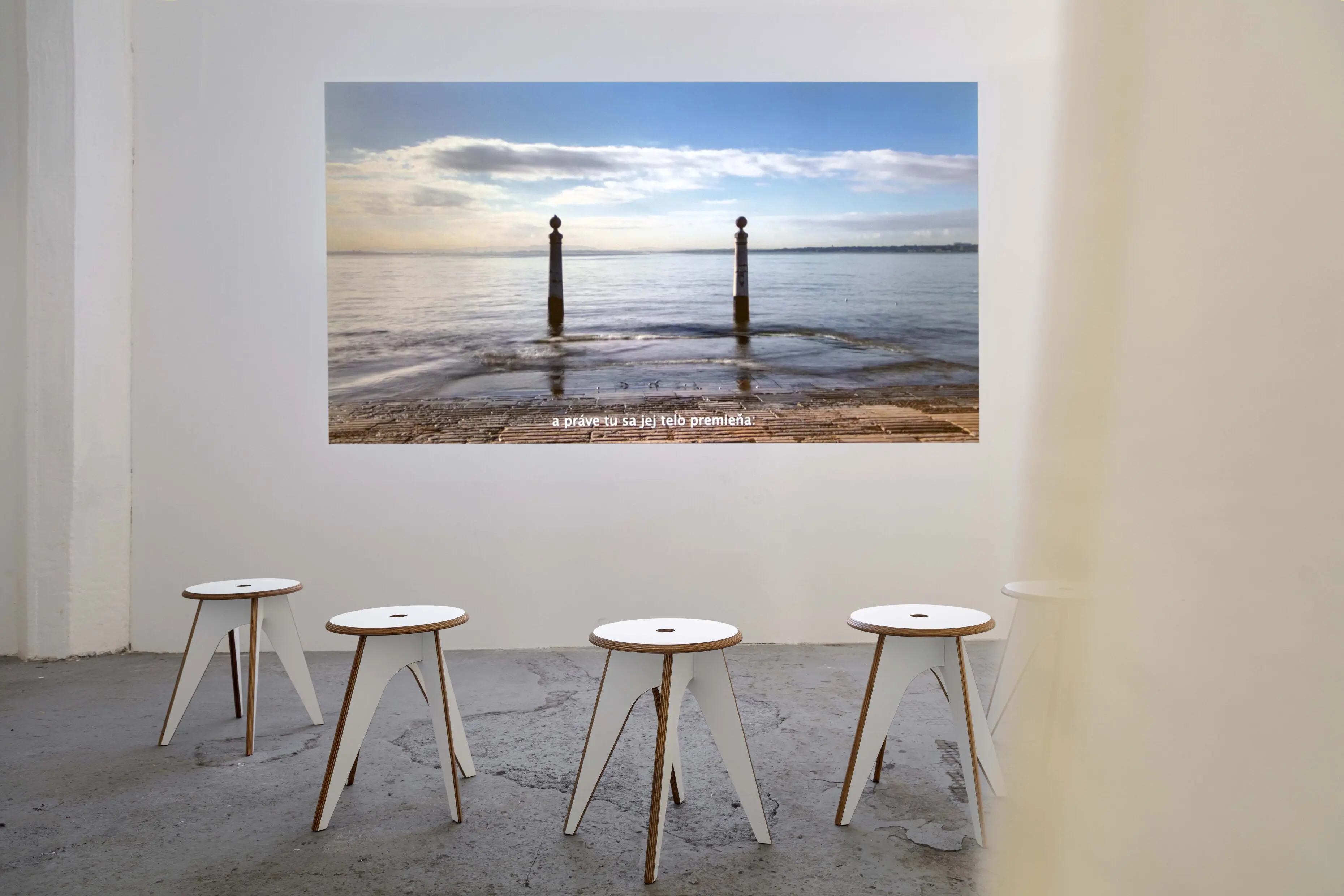
Deep Time Walk is the name of a method used to experience the depth of history in motion. Moving through the exhibition should evoke an imagination of deep time, a different perception, an awareness of the variability of geological processes and their interconnectedness with our lives. The works are based on experiences of movement and reflection on the landscape, a different way of experiencing time through technology, a connection to the time of the ocean, the clash of human and non-human worlds, and the variability of matter. The artworks explore the trembling edges, deep time of geology, the journey as return and deepening knowledge. The works learn from the stones, the movements of the Earth and a planetary system that, despite it may seem so, is not unchangeable. Galaxies are constantly moving away from each other, the expansion of the visible universe is accelerating, the interior of our Earth is in constant motion, its movements intimately intertwined with ours.
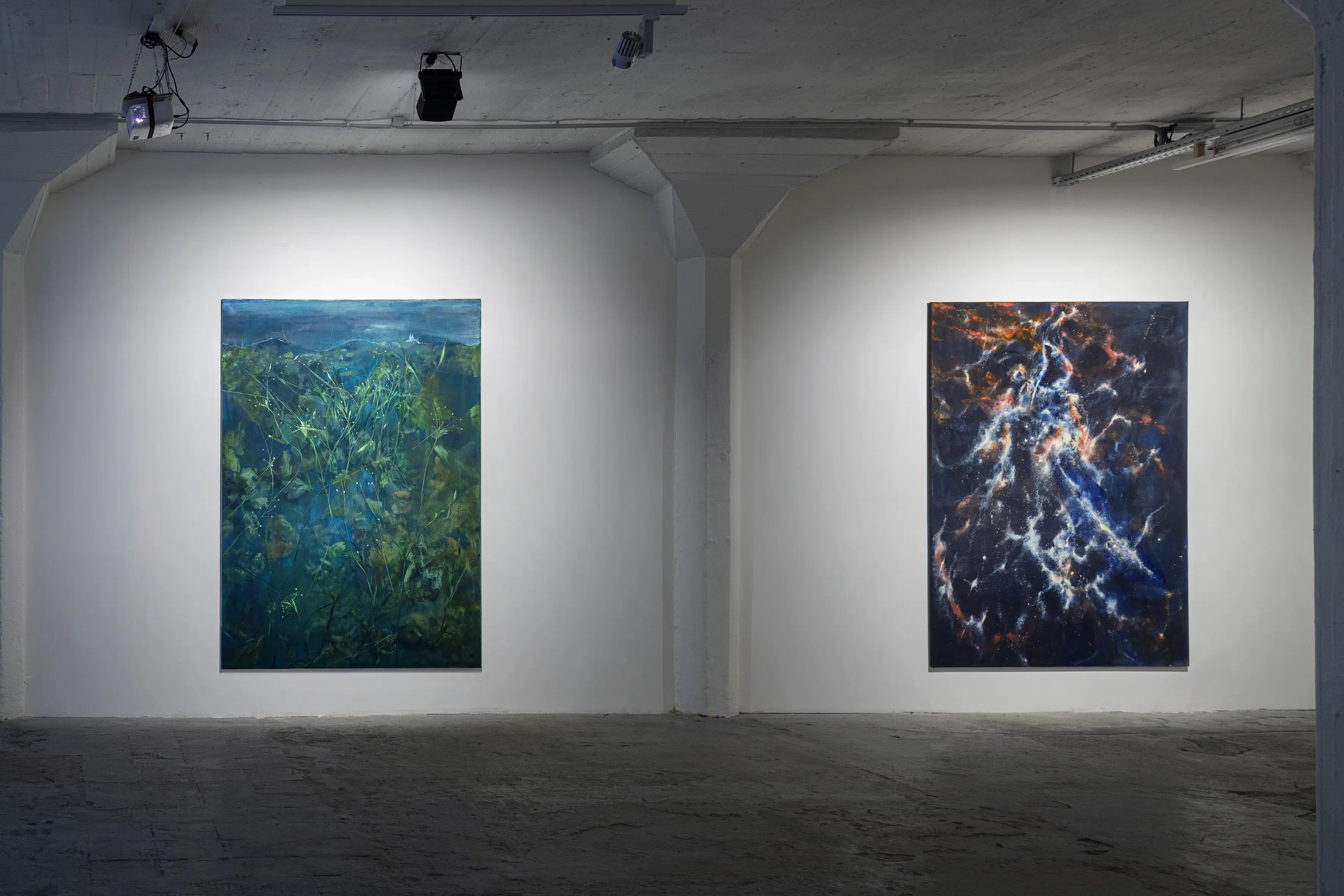
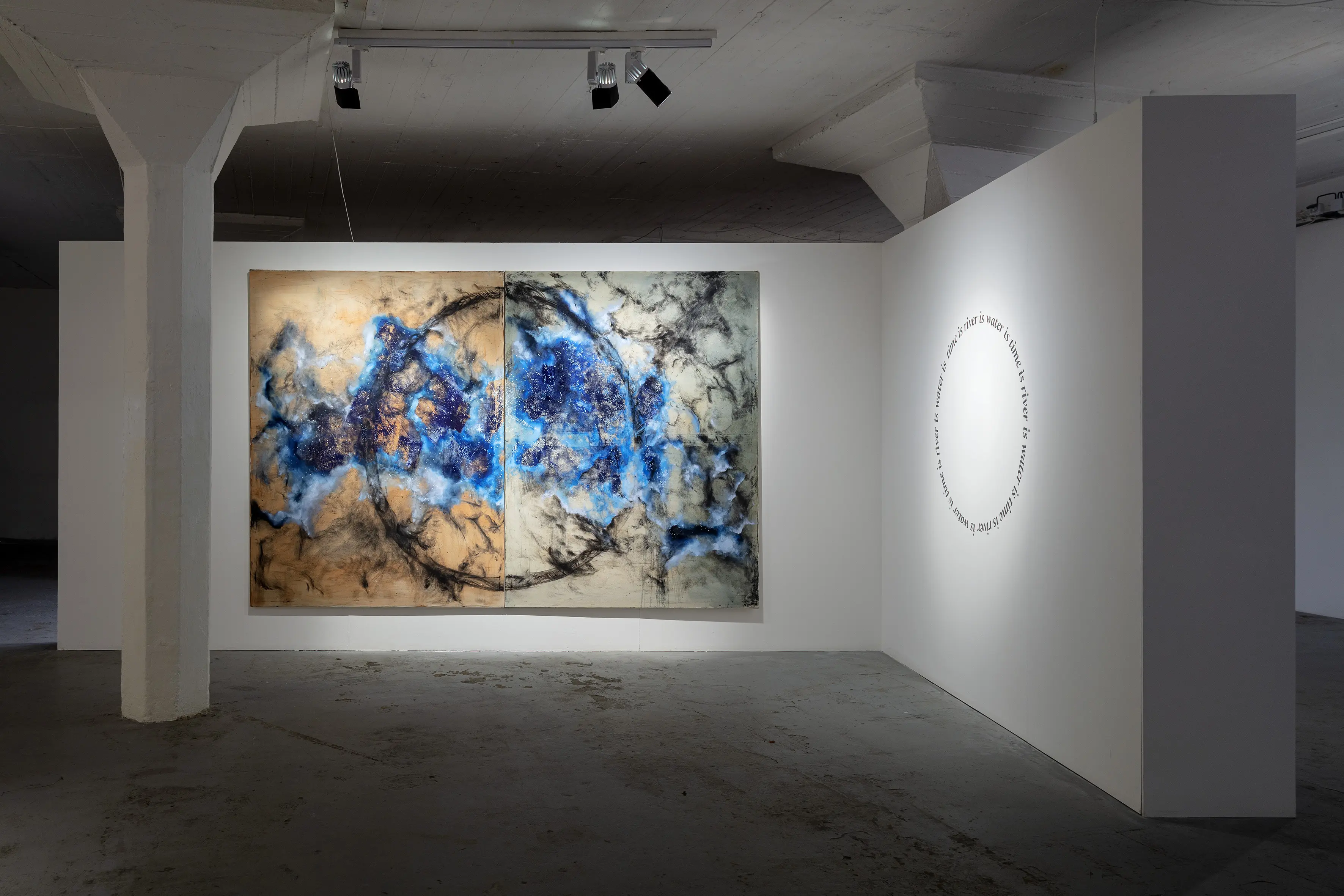
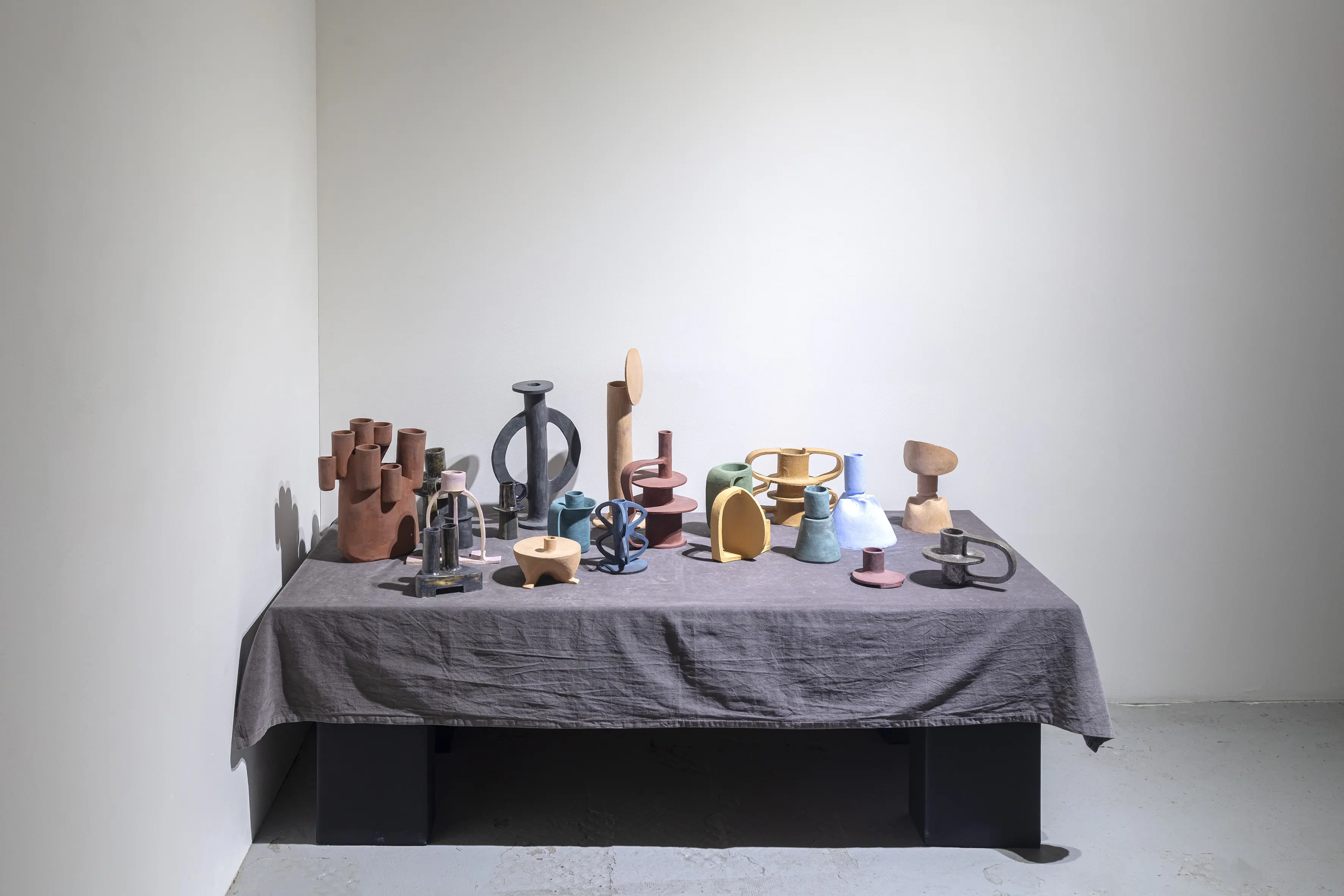
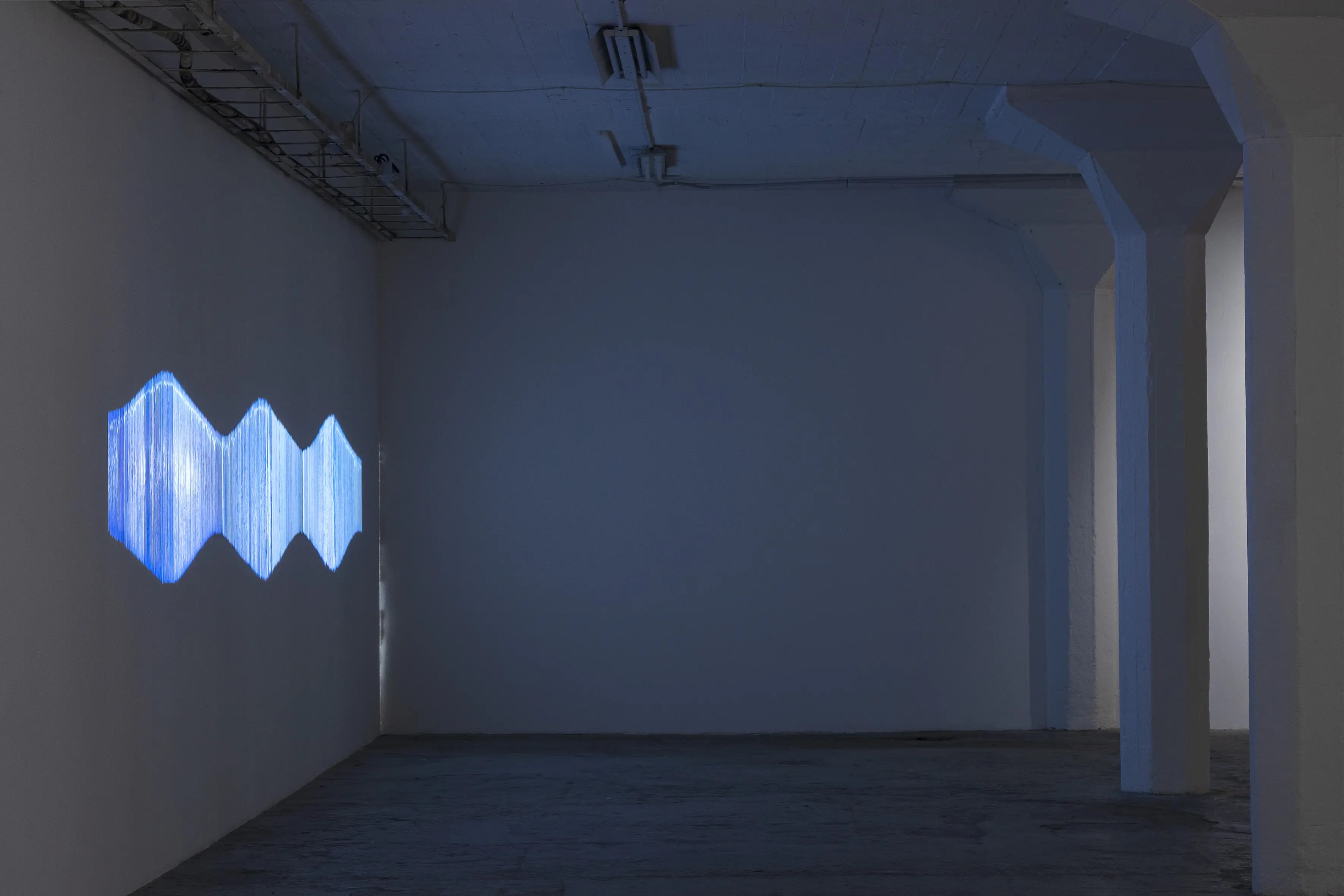
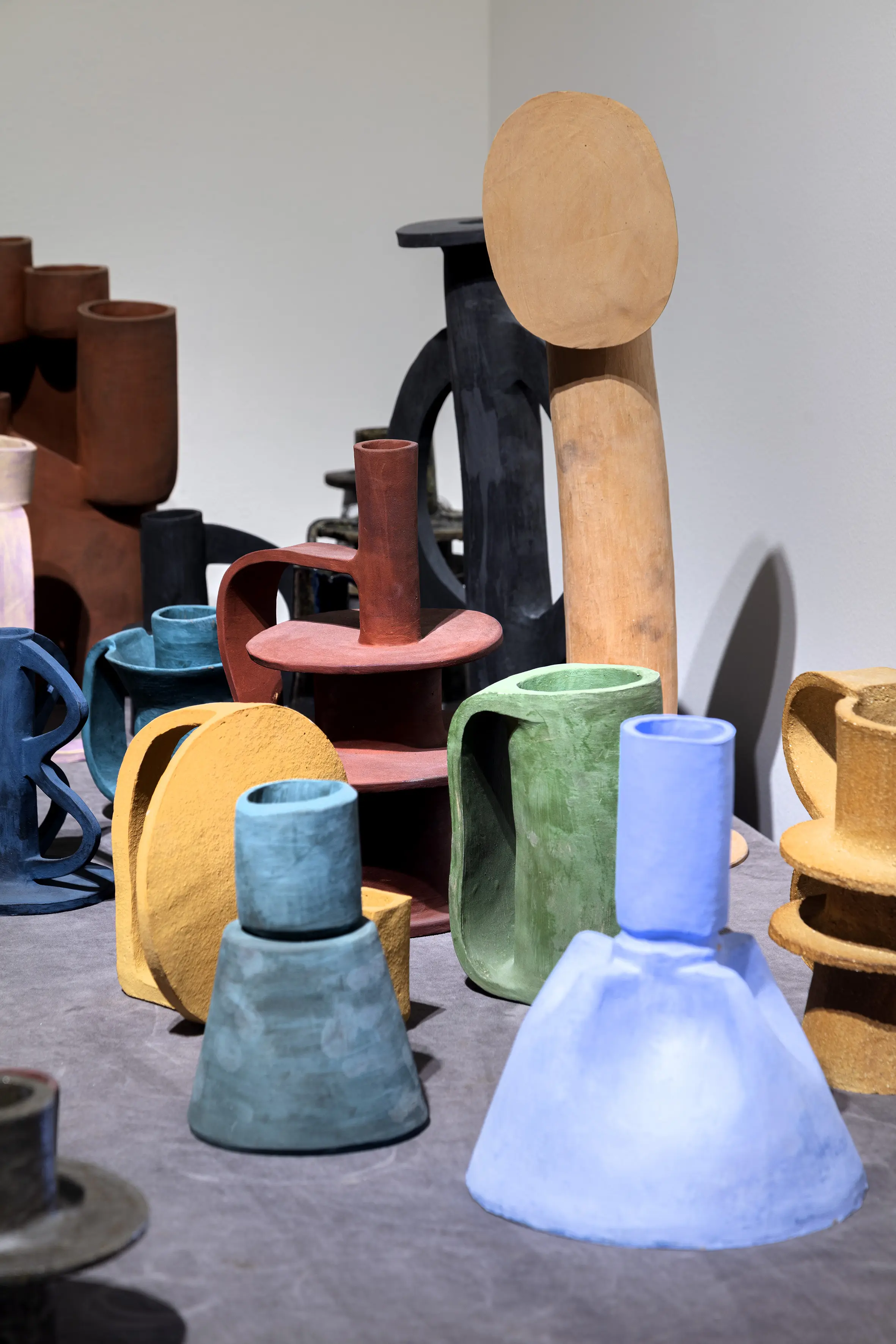
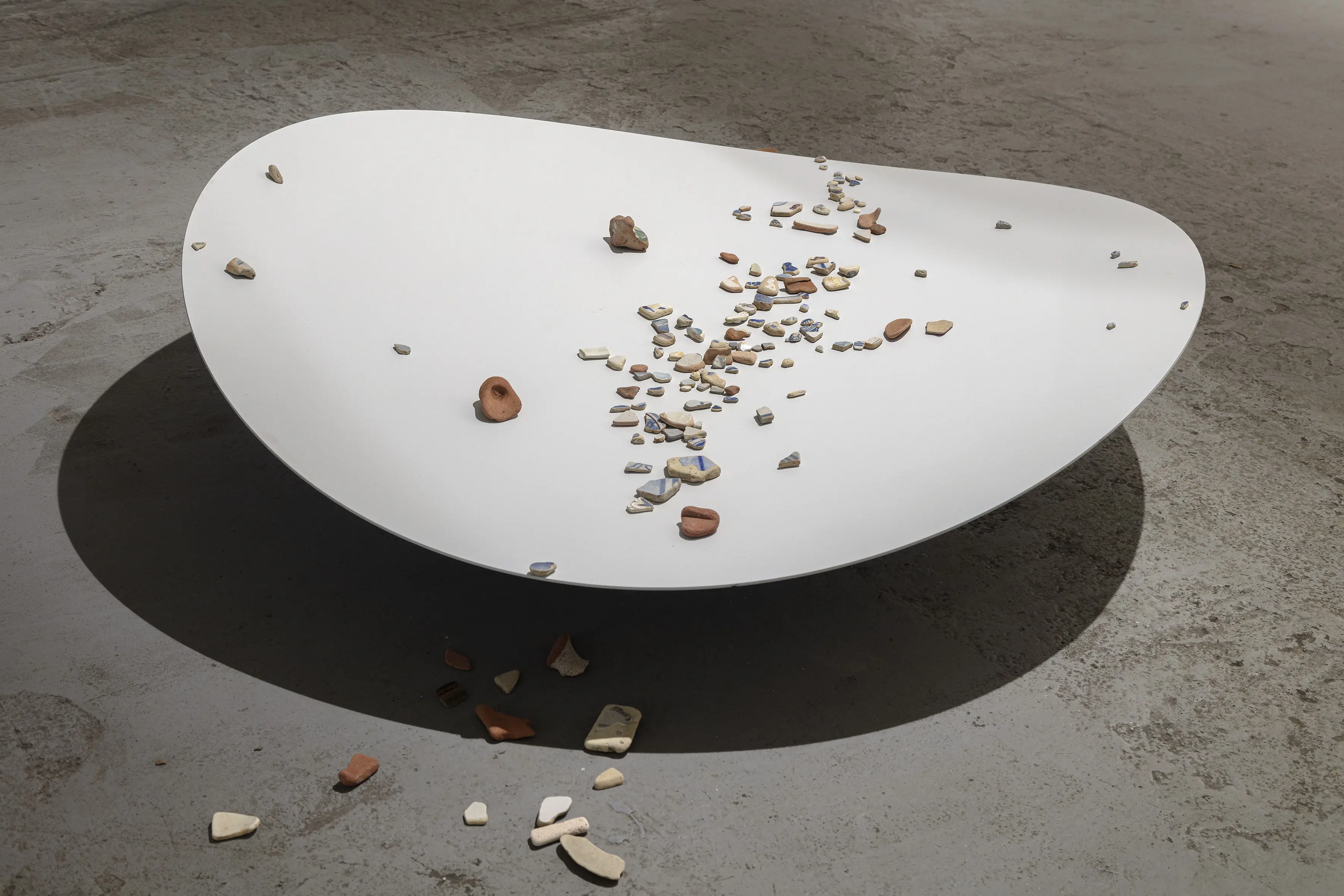
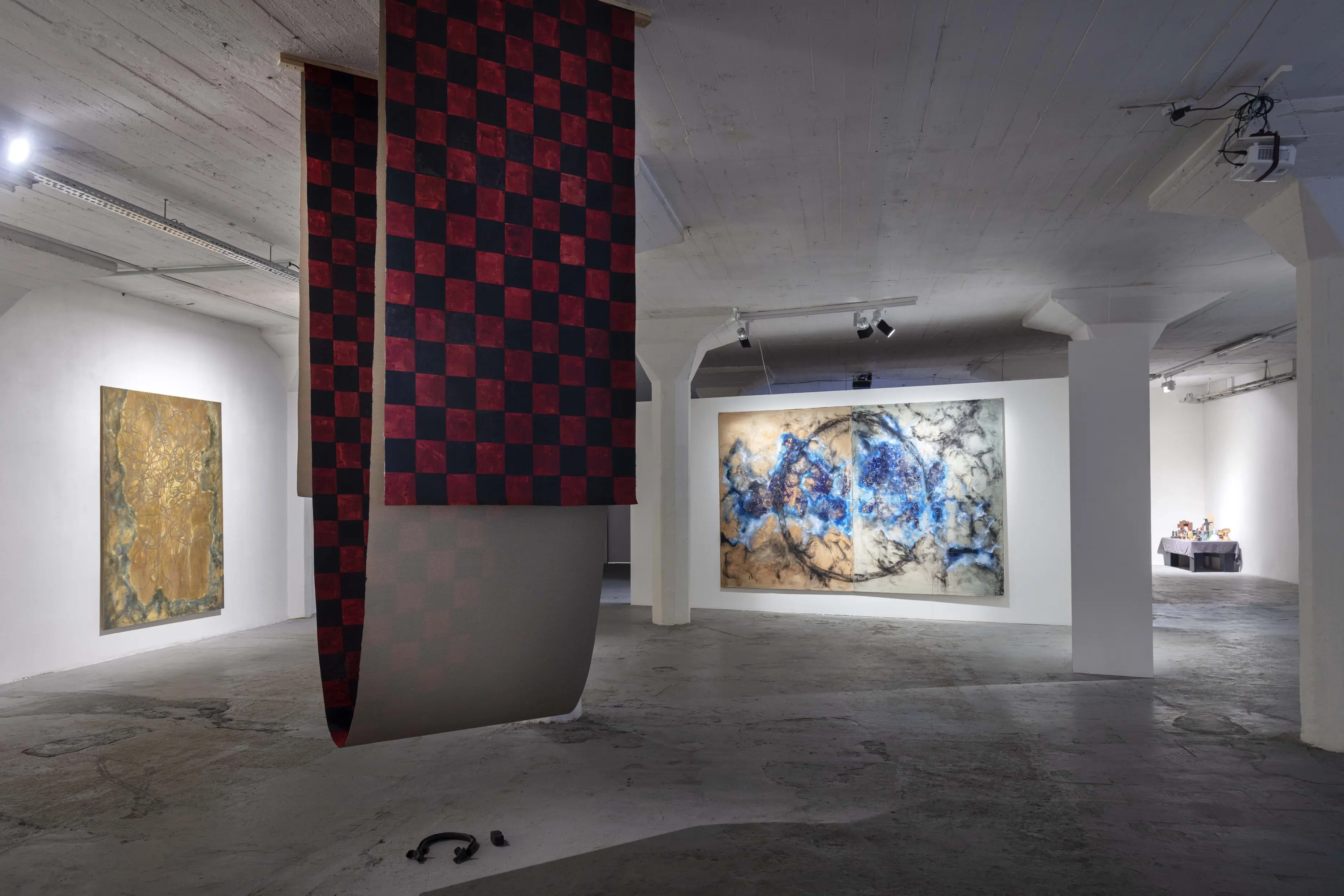
The basis for the set of paintings by Jan Pražan was created during a walk in April this year, when the author, on a several-day journey from Jeseníky to the Orlické Mountains, tried to connect to space time. Excerpts from the diary from the trip are loosely related to the geological landscape painting, where the initial experience is transformed during the process of painting. Katarína Poliačiková explores changes in our perspective over time. In Trembling Edges, she works with the story of an imaginary ceramic shard collector, an archaeologist of water reflecting on the contradictions between the solid and the liquid, the relationship between the river, the sea and the influence of time. How do inorganic materials perceive time and how does their time relate to human time? Jimena Mendoza’s set of candlesticks could refer to the birth of the universe, the primordial separation of light from darkness, our dependence on sunlight and the changes that come with artificial light. Most of the visible matter of the universe is concentrated in the stars. There are stars five million times brighter than the Sun, but there are also stars whose brightness is comparable to that of a candle burning on the Moon as seen from Earth. Ceramics is inorganic material that takes its shape in a kiln at high temperatures, however, originally clay was dried in the sun. The red and black geometric patterns of the painting can be read as a reference to cyclical time, but also to the limits of knowledge based on calculations. Observations of the cyclical, periodic nature of phenomena in the sky, the movements of the Sun, Moon and planets shaped the first knowledge of the universe and the first perception of time. Michal Kindernay uses technology to convey phenomena that are otherwise inaccessible to our perception. They record long-ter observations and reveal different temporal dimension and atmospheric processes. The Weather Cycle consists of three years of records of the alternation of day and night.
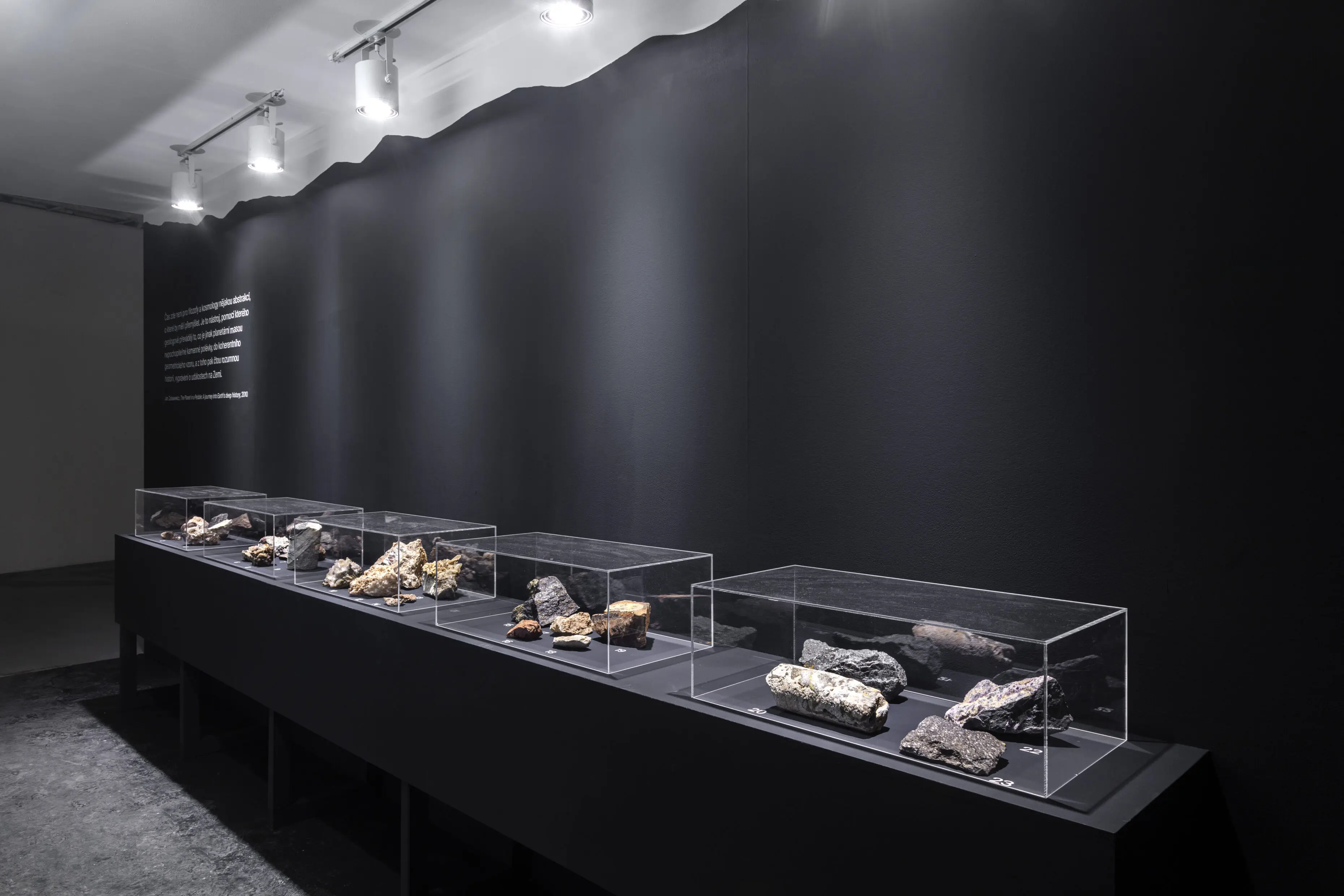
The exhibition includes a geological museum intervention. The rocks, minerals and fossils tell the story of the birth of the universe, the Earth, but also of a particular location and the person who found it and placed it in the museum, where it becomes part of human history for a while. Minerals and fossils contain the recorded history of the Earth from its beginnings, including its diverse geological and human disturbances. They are our guides through deep time. The exhibit was created in cooperation with the Chotěboř City Museum.
Jimena Mendoza is a Mexican artist based in Prague. Her interests include applied arts, craft and design, she primary works with ceramic, glass, drawings and collages which she combines into intricate installations. Her projects filter non-Western and Pre-Columbian iconographies tackling some former Eastern European depictions. Nowadays, she works in a project tracing the use of traditional textiles. She is a member of the Sistema de Creadores de Arte in Mexico.
Some of her exhibitions: 2023 Cuerpo III, Berlin Model; 2022 Shirt Skirt Skin Kin, Kurzor, Prague; 2021, Monoliths, The Yard, Colorado, USA; 2020 Linea, Svit Gallery, Prague.
Katarína Poliačiková is a visual artist and writer based in Slovakia. Her works include photography, video, performance and text to propose new ways of storytelling. She is interested in time and memory, mixing pesonal and scientific narratives, bringing the intimate and the universal into a dialogue with each other. She believes that narrative is the oldest and most pervasive way of connecting with others and ourselves. She sees art as a vessel for cultivating deep attention, curiosity, and empathy. She has exhibited her work across Europe as well as in New York, and has participated in numerous residency programs. In 2019, she created a solo exhibition Souvenirs of Fire at the Museum of Natural History and Science in Lisbon. One of her latest publications, entitled DAY, combines photographs and essays, was commissioned by Galéria mesta Bratislavy on the occasion of its 60th anniversary. Since 2011, Katarína has been represented by Jiří Švestka Gallery.
Michal Kindernay is an intermedia artist, curator and performer. His audiovisual installations connect the fields and tools of art with technology and science. He often touches upon themes of ecology and reflects on environmental issues through the application of technological approaches in relation to nature. His works include video performance and interactive installations, intermedia and documentary projects, musical sound compositions and theatrical collaborations. He is one of the founders of the artistic non-profit organization yo-yo, initiator of the RurArtMap project. He is also a teacher at the Centre for Audiovisual Studies at the FAMU in Prague (Film and TV School of Academy of Performing Arts) and at Prague City University. As an organizer and artist, Michal has participated in many international projects.
Jan Pražan is a painter and occasional teacher. From 2006 to 2012, he studied from the Faculty of Fine Arts of the Brno University of Technology (Martin Mainer’s Studio of Painting 2). In 2008, he completed an internship in Spain (Cuenca), in 2016 he spent a residency in India (Meghalaya). He has also worked in art therapy. In his paintings, Jan processes inspirations from nature, travel, and the study of art and spirituality of South American tribes or Eastern philosophies. In recent years, his works have been influenced by cosmology. He works with a vision of a living, interconnected universe that takes the form of a continuous continuum in which everything is in constant change.
Recently, Jan had solo exhibitions: MLHAHMLA (with Samuel Pauč), Kuks, 2023; SciArt, Makráč Gallery, Prague and Leibniz Institute Dresden, 2022; Jan Pražan / Dance Hall Rychlebské hory, 2020; Source (guest – Dominik Strouhal), Alternativa Gallery OGV Jihlava (curator Jiří Zemánek), 2018. He participated in group exhibitions: Artists and pilgrims, galerie CoCo, Dobrš (curator Jiří Zemánek), 2023; Ghostwriter / Eternal return of the same, Art division team, galerie FONS Pardubice, 2022 or Being Bytost, OFF Format, Brno, 2021. Lenka Dolanová is an art historian and curator, she has worked as an art critic, among others in Kulturní čtrnáctideník A2. She founded the sound gallery IGLOO at the Regional Gallery of Vysočina in Jihlava. She is a member of the association Vasulka Kitchen Brno and curator of the Brno House of Art and the Chotěboř City Museum. She is mainly interested in the intersection of contemporary art, new media and ecology and cultural events in the regions. Lenka is the initiator of the map of rural and peripheral cultural initiatives RurArtMap. Her most recent publications include (ed.) Nejedna rodina: Jirousovi, Padrtovi, Ságlovi (Nadační fond 8smička, 2020), A Dialogue with the Demons of the Tools: Steina and Woody Vašulka (Vašulka Kitchen Brno, 2021). Cat within us. Sculptor and musician Libor Krejcar (Argo, 2023) and Zdenek Rykr in Chotěboř (CEKUS Chotěboř, 2023).