




Radka Částková and Magdalena Šimurdová
The mental stream of ancient Greek philosophy, traditionally represented by a timeline spanning from Heraclitus to Aristotle, was dedicated to exploring the nature of this world. Over the centuries the developement continued and, together with mathematics, the derivation of physical laws and observation of stars, new postulates and exact knowledge of the Earth were defined. What remained almost unchanged during the evolution of ancient Greek thoughts was the firm belief that the world was in constant motion and that a state of stillness or rest was impossible. It was the motion of the celestial bodies, in particular, that led Archimedes to his famous statement: “Give me a firm spot on which to stand, and I shall move the Earth.”
However, the constant motion is not only a matter of the Earth’s own rotation, circular motion of the entire solar system, galaxies and nebulae. It lies much closer: below the surface. These movements are rarely manifested in ways that are physically perceptible to humans. The processes in the inner core of the Earth are not fully known yet; but we suspect that an apocalyptic mystery takes place in the interior of our planet. The closer we move to the surface, the calmer the movements of rocks, magma and energies become. A disturbance in the Earth’s mantle is defined by the tectonic term volcano, which can be metaphorically interpreted as a gateway to the underworld. Vulcanus was the Roman god of fire and forge who was able to tame a fire and transform its destructive power. What is probably the most apt description of volcano is the medium for directing movement from the inside – out.
A very interesting chapter in the history of geology was the clash of ideas between plutonists (volcanists) and neptunists. While the plutonists explained the development of the Earth’s crust as the result of an inland fire, the neptunists held that all rocks, minerals and fossils originated from the solutions of a gigantic primeval ocean, which for generations was considered to be the residue of the Great Flood. History, however, favoured the theory of volcanism, which is also regarded as the basis of modern geology. Looking inside the Earth at its internal movements, we can witness fierceful plate friction, continental shifts and earthquakes. The instrument capable of recording these processes is called the seismograph (from the Greek seismos – earthquake and graphein – to write). Simply put, it is the tool that maps the back and forth movement.
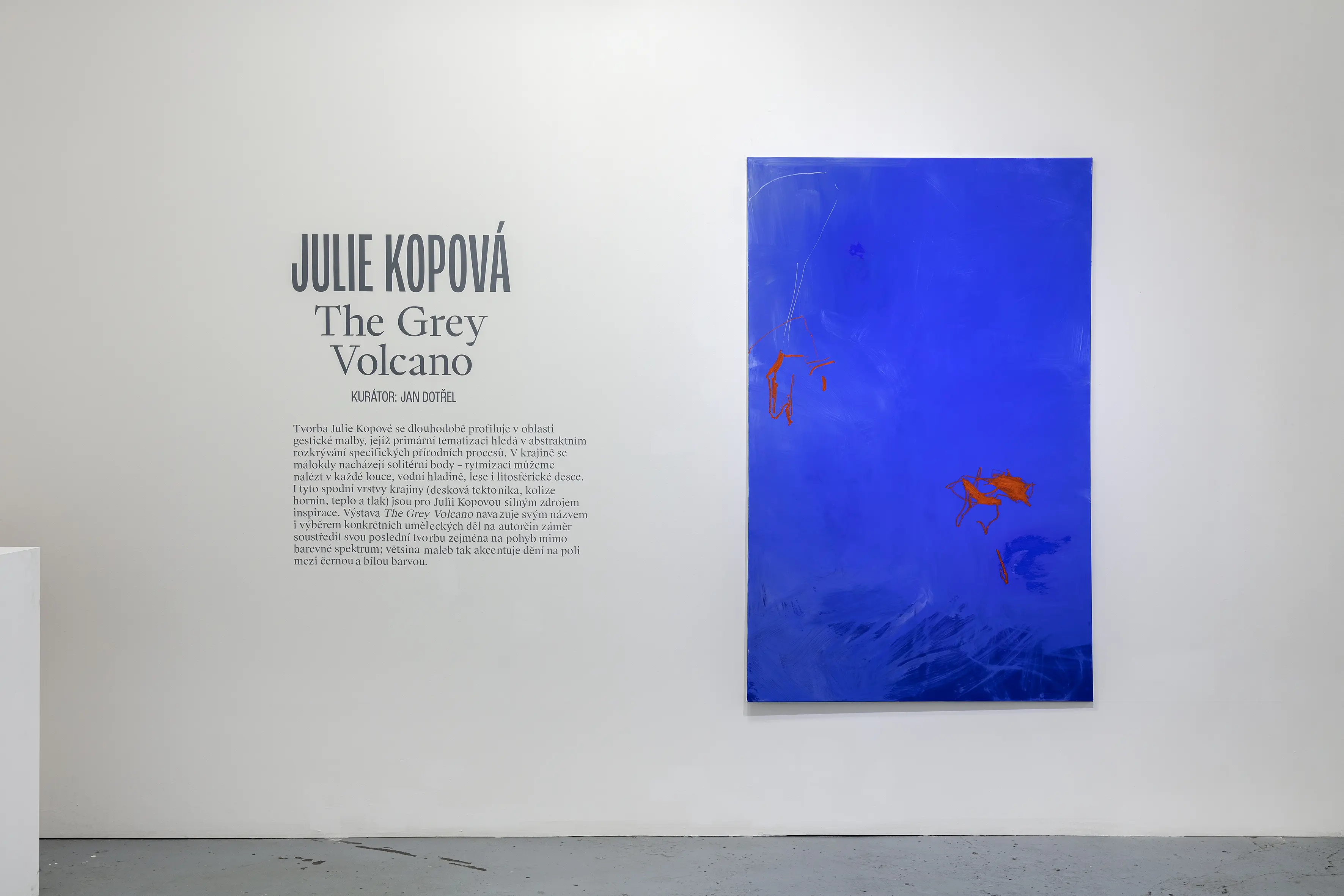
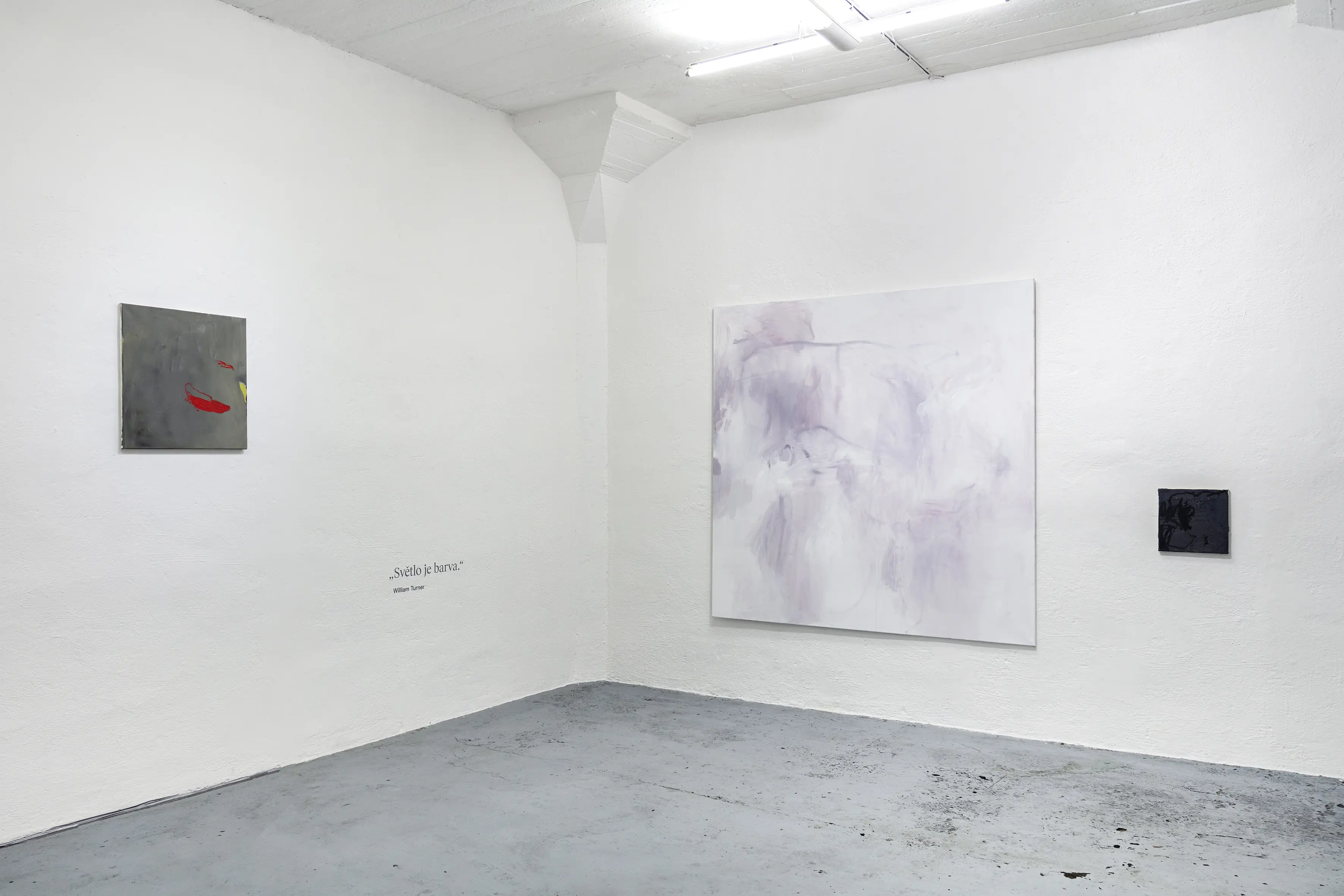
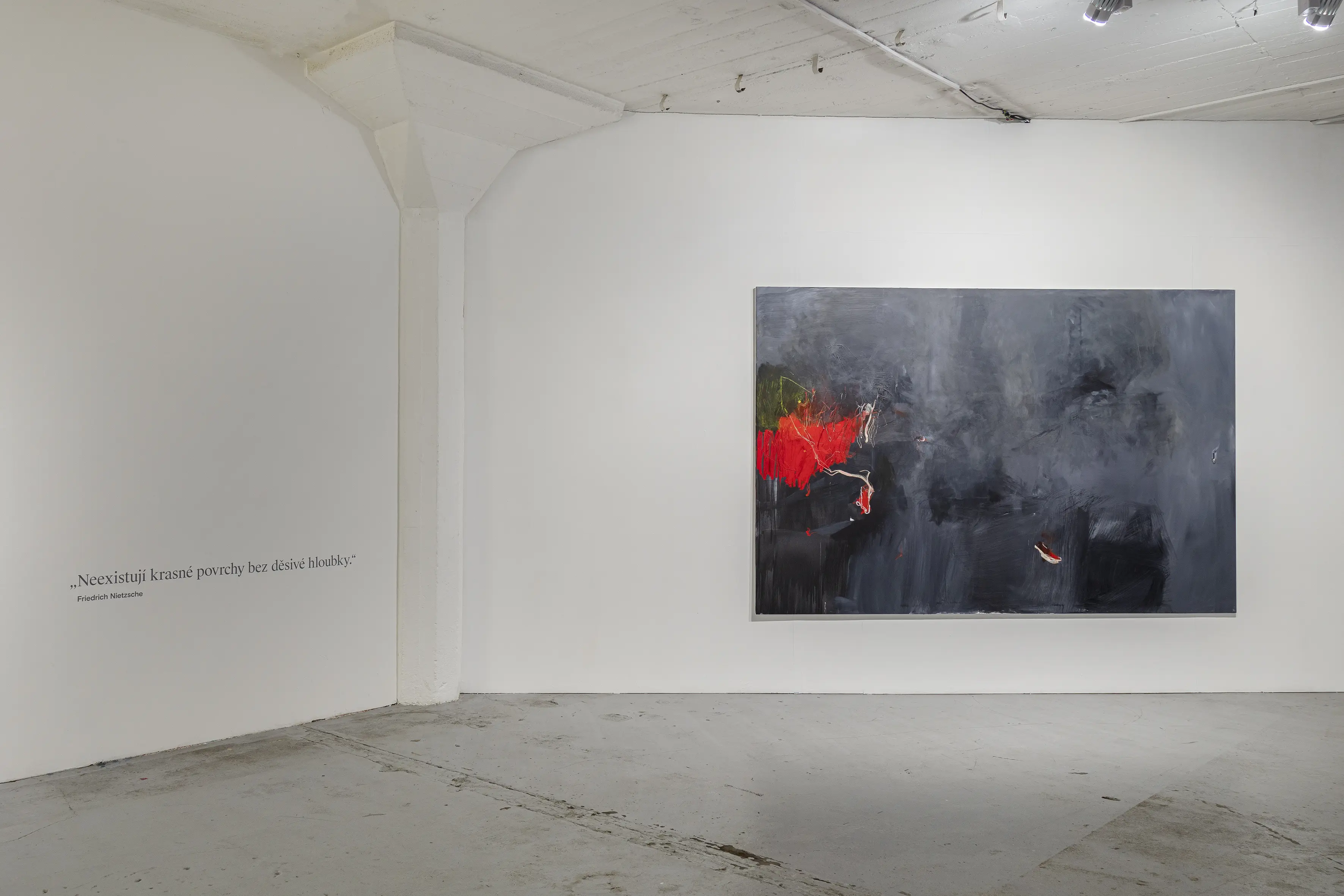
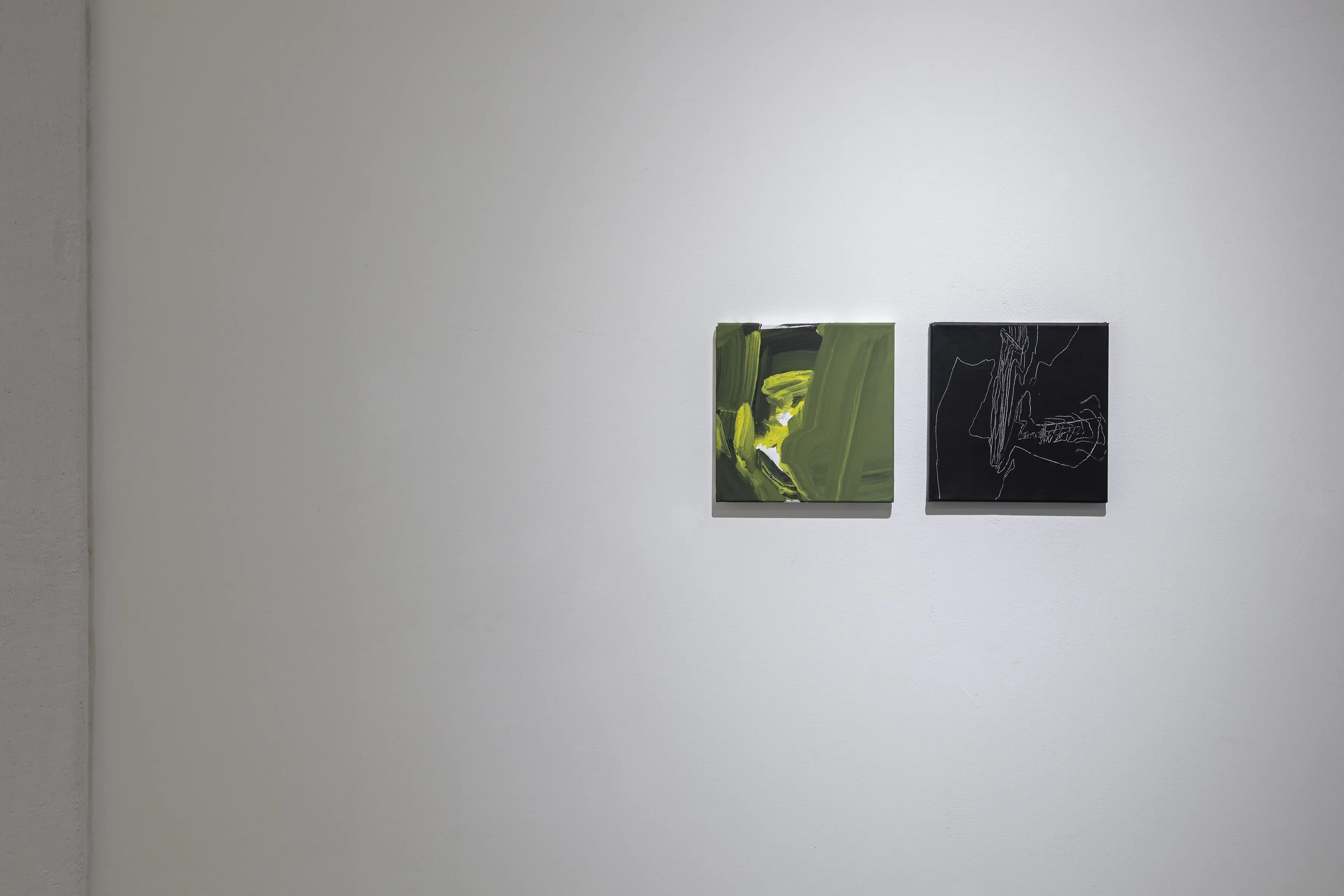
Julie Kopová’s gestural painting, among other things, consciously follows on the effort to represent the underneath tension. The visual analogy between the seismograph line and Julie’s characteristic painterly manifestation, therefore, need not be merely metaphorical. The gestural movement of the hand and the multilayered nature of Julie’s work suggest a coming to terms with natural tension and its transformation into rhythm. Painting in general (as well as other types of art) seeks to represent inner tensions, movements of the human body and depths of the soul. A similar perspective can be applied to the work of Julie Kopová, who has chosen to represent her sensitive (intimate, fierce and sophisticated) inner world through (seismographic) painting.
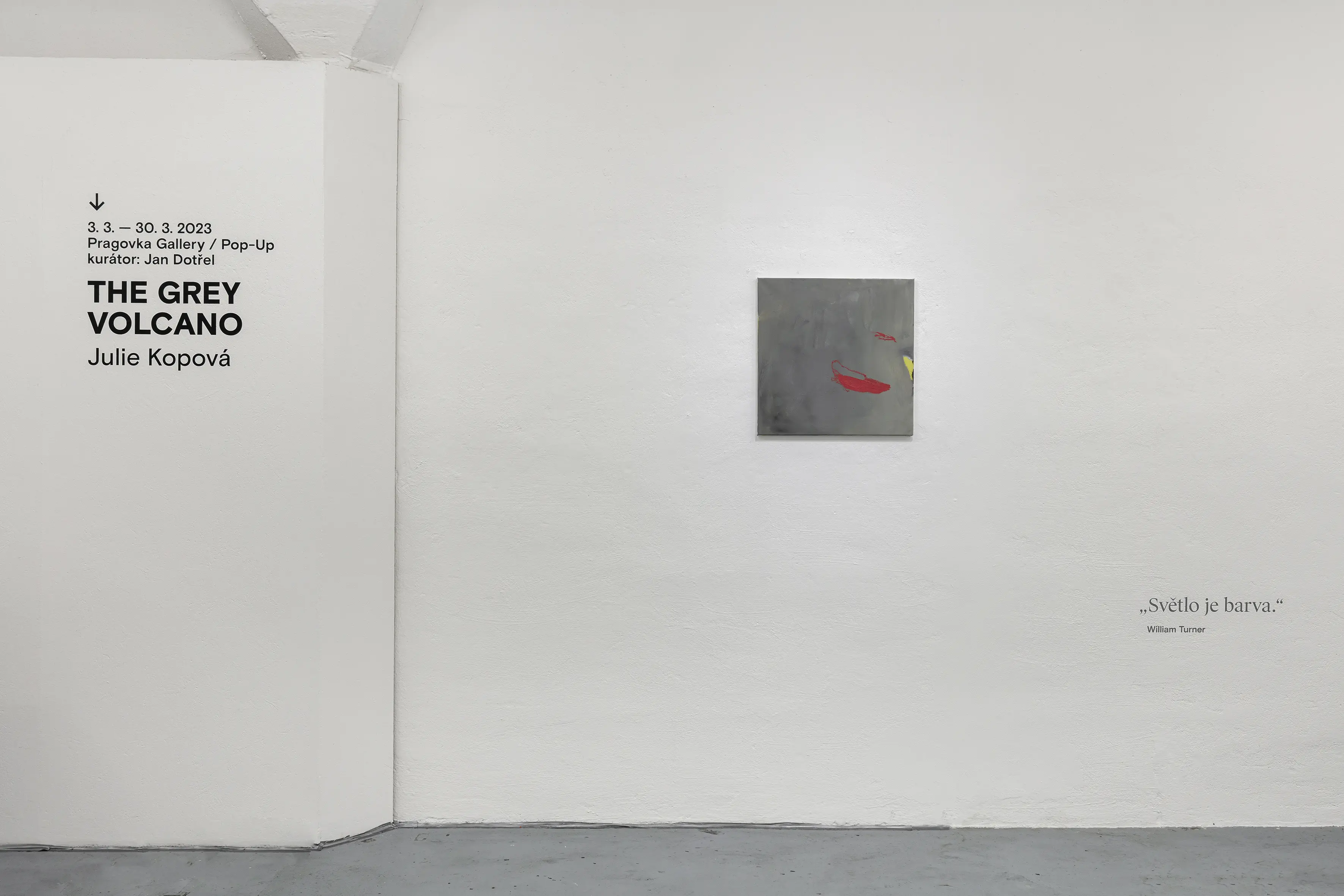
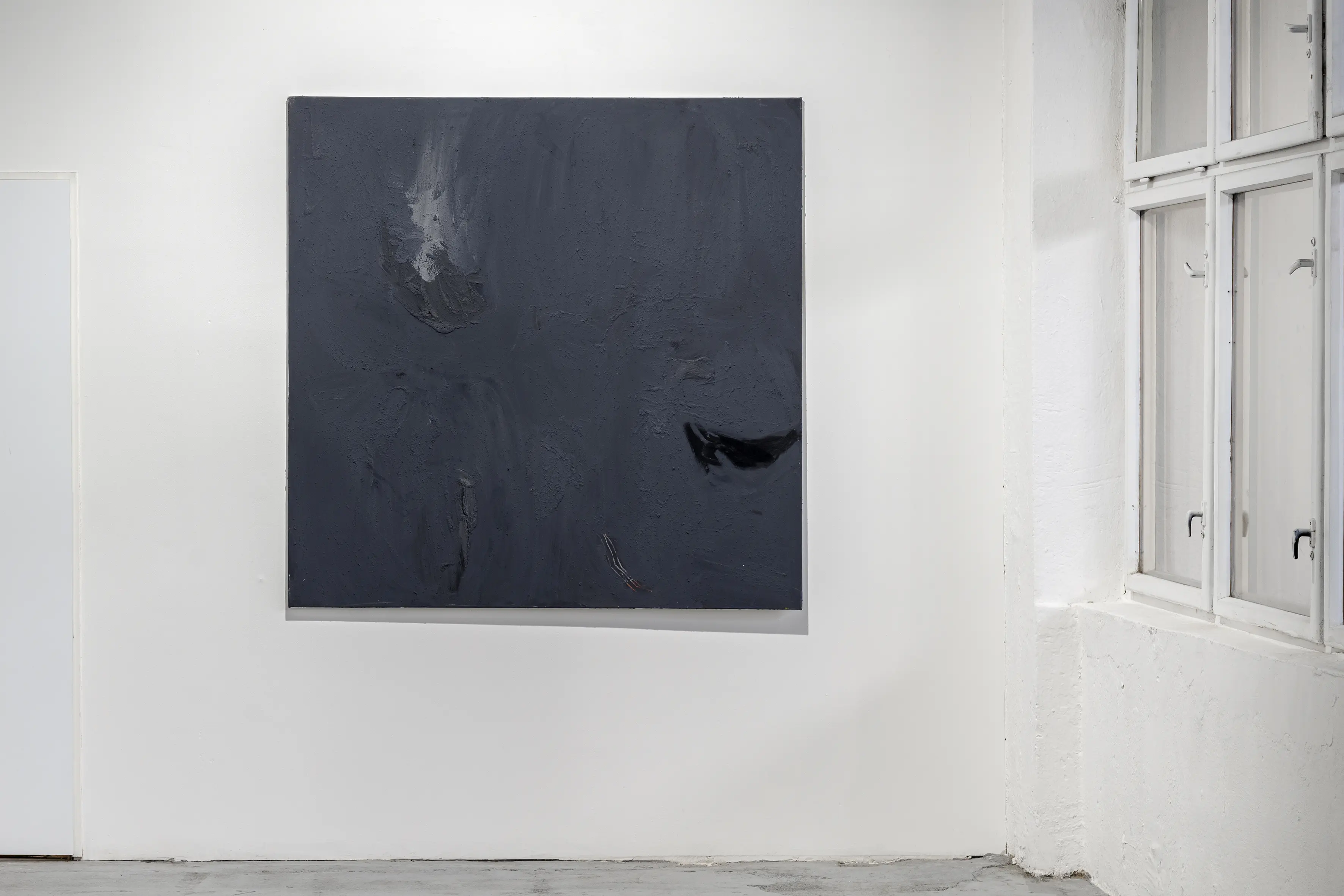
The title and selection of specific artworks presented in the exhibition The Grey Volcano follows up on the artist’s intention to focus mainly on movement outside the colour spectrum; most of the paintings thus accentuate the field between black and white. This decision may relate to the denial of the archetypal understanding of colours, where each colour refers symbolically to certain value, meaning and spiritual aspects. In this series, Julie Kopová is rather consciously holding back with bold colours, while also referring to the natural colours of tectonic processes such as lava, smoke or rocks by choosing a dominant black and white gradient. Compared to the artists previous projects, which were based on more detailed lineation, in this exhibition we can observe works of thick layers and pasty paint, whose layering and engraved distortion of the surface allude to mountain-forming processes. Tectonics, the formation of rocks, and movements of the Earth’s crust are linked to, more than to anything else, to the long course of time. Coming to terms with temporality and attempting to transfer it metaphorically to the canvas is one of the most essential and universal elements of Julia Kopová’s work.
Jan Dotřel